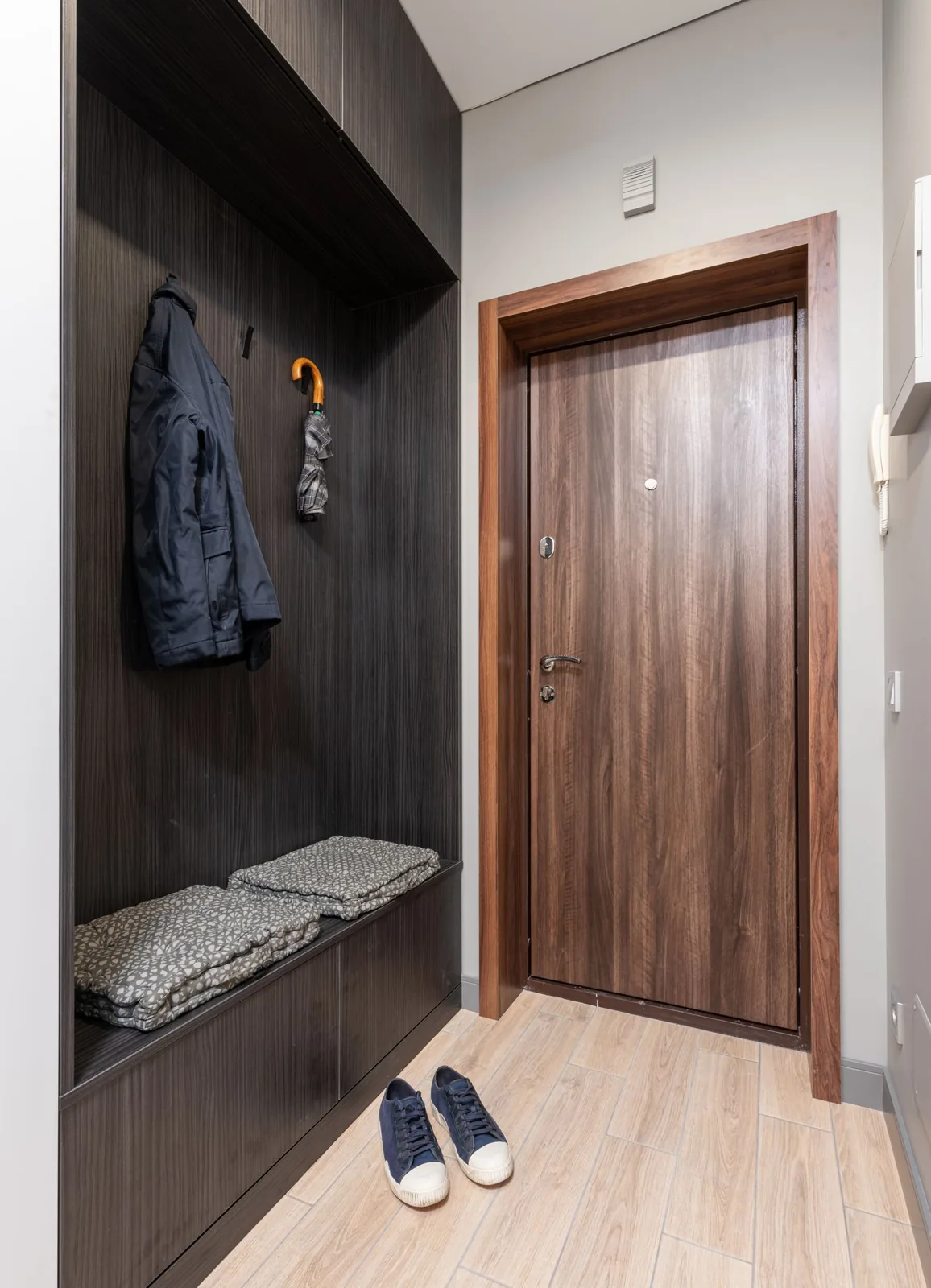
The most useful place in a wardrobe is the one you can reach and understand without rearranging other things. Assign that space to the clothes in your real week, then plan separate places for occasional pieces, accessories, and items between wearing and washing.
Describe a real week of getting dressed
List the clothing groups you use during an ordinary week. Include work, home, exercise, and any other recurring activities that actually apply to you. Do not start with an ideal capsule wardrobe or someone else's recommended item count. The purpose is to understand which clothes need convenient access and which can sit farther from the main reach area.
Notice where your routine changes clothes during the day. A person who changes after commuting may need a temporary place for suitable rewearable items, while another household may send most worn clothes directly to laundry. This is a storage-planning distinction, not fabric-care advice. Follow the individual garment's requirements and keep clean clothes separate from items that need washing, drying, or other attention.
Review one section without emptying the whole room
Choose a manageable wardrobe section and set out its contents safely. Group items according to the way you choose them, such as everyday tops, work trousers, or accessories used together. There is no need to make every group the same size. Put repair decisions and uncertain items in a separate, bounded place so they do not interrupt the active storage plan.
Check the internal dimensions of the space before adding any organizer. Rails, drawers, doors, and hinges affect what is usable. Do not move structural fittings or add loads beyond the wardrobe's instructions. If the unit is loose, damaged, or missing required anchoring, address that issue through the appropriate instructions or qualified help rather than loading more items into an unstable arrangement.
Assign convenient space by frequency and reach
Place the clothes you reach for most often in the areas you can use comfortably. IKEA's wardrobe guidance distinguishes daily items from occasional and seasonal storage. Adapt that approach to your own reach rather than assuming everyone can use the same shelves. A frequently worn item should not require lifting a heavy box or moving a row of unrelated clothes.
Reserve less convenient space for suitable items used less often, but do not put heavy or difficult-to-handle loads overhead just because they are occasional. Keep access equipment and individual physical needs in mind. A storage plan is successful when the return journey is practical too: hanging a garment back up should not demand clearing a rail or extracting a tightly packed hanger from a crowded bundle.
Choose folded and hanging storage deliberately
Follow garment-care guidance when deciding what to hang or fold. Within those requirements, compare which form makes the particular clothing group easier to see and retrieve. Folded items can be arranged so each is visible, but the arrangement must remain achievable after laundry. A complicated display is not useful if it repeatedly collapses into a pile.
Use suitable containers only where they solve a specific problem, such as separating small accessories or keeping a group together. Measure their internal capacity as well as their exterior footprint. A box that fits the shelf may still be too deep to use easily. Avoid assuming a matching set is necessary; existing appropriate containers can help you test categories before spending money on a final arrangement.
Create a legitimate place for the in-between
Some clothes are neither ready to return to clean storage nor ready for the laundry basket. Decide what your household's care routine permits and give those items a limited, appropriate destination. IKEA's clothes organization ideas include a transition zone.
Define when an item leaves that stage. It might return to use, go to laundry, or need inspection according to its care requirements. Do not seal damp clothing into a box or present airing as a replacement for necessary cleaning. Keep the arrangement separate from clean garments. If the intermediate area constantly overflows, reduce its scope or review the decision process instead of adding more undefined holding space.
Review the wardrobe after the return journey
Watch what happens when clean laundry comes back. If putting clothes away is the hardest part, the categories may be too narrow or the containers too full. Try changing one area and repeat the return task. Check whether another person who shares the storage can understand which compartment belongs to them and how much space is available.
Review when work, weather, size needs, or household arrangements change. An occasional item may become daily, and last season's easiest shelf may no longer be the right one. Keep a small amount of usable space for movement rather than packing each compartment to its physical limit.
One rail shared by office and weekend clothes
Draw a shared rail containing weekday shirts, occasional formalwear and another person's clothes. Allocate the reachable section from actual use rather than equal-looking hanger counts. CPSC's anchoring guidance remains relevant if this exercise leads to a new dresser or storage unit; allocation does not replace installation requirements. Give clothes awaiting a decision a named temporary location instead of squeezing them into someone else's section. After a normal laundry return, inspect which group no longer fits. That observation distinguishes a capacity problem from a label problem, without requiring another whole-room clear-out.