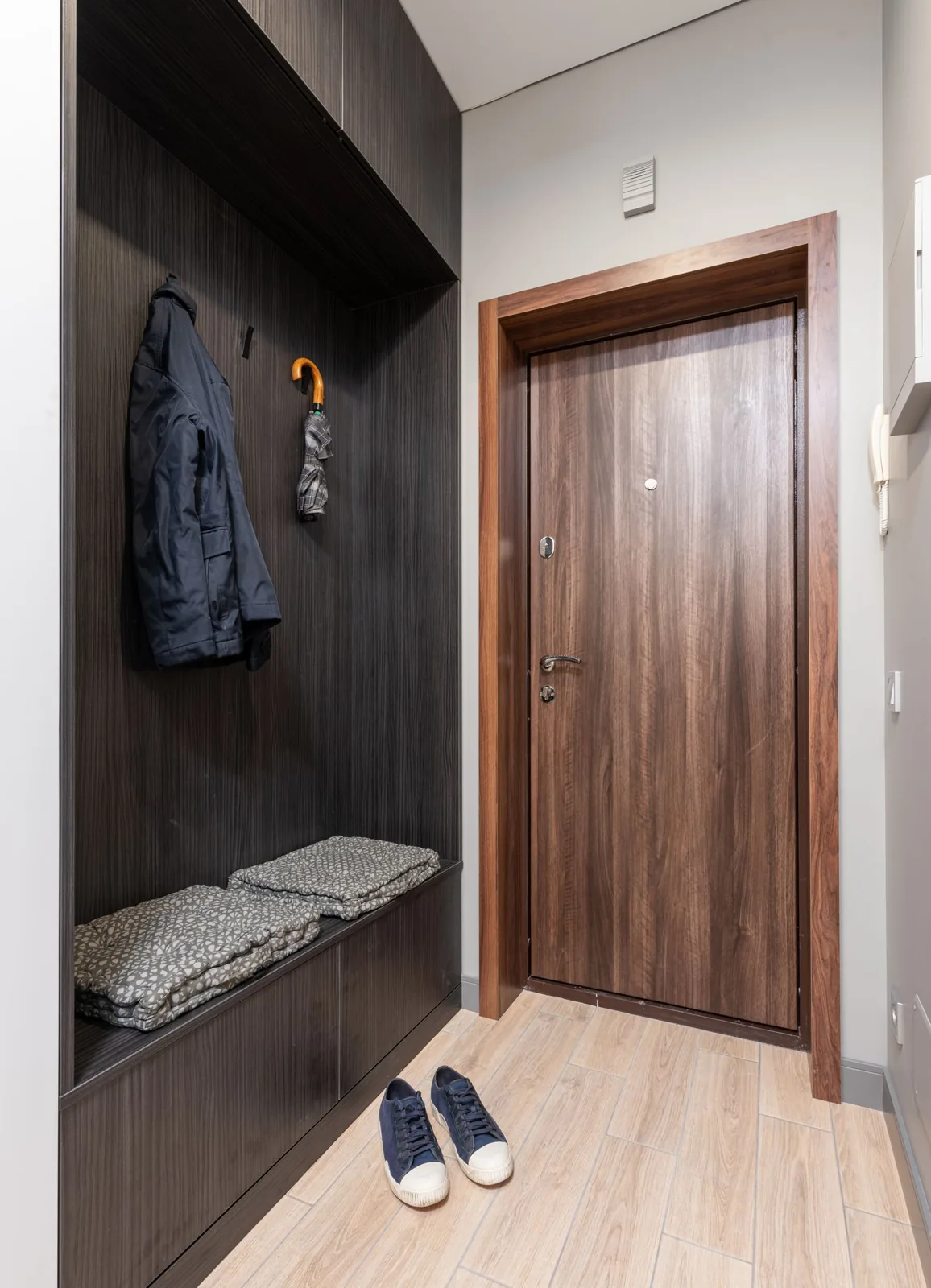
An entryway works at two busy moments: when you arrive with things in your hands, and when you need to leave. Plan those moments before deciding whether the space needs a console table, a bench, or simply a better place for a few essentials.
Watch the arrival sequence
Think through your most ordinary arrival. You may put down a bag, remove shoes, take off a coat, and deal with post. In a narrow hall, the order matters: a storage door that opens into the place you need to stand can make a well-equipped entry awkward. Sketch the doorway, its full swing, and the route into the home.
Include everyone who uses the entrance. A child's reach, an adult carrying groceries, and someone using a mobility aid can require different arrangements. IKEA's family hallway guidance emphasizes accessible storage. Apply that principle by checking reach and movement with your actual household, rather than choosing a standard height from a decorative photograph. Keep exits and required circulation clear at all times.
Separate the active set from the collection
The entrance does not necessarily need to hold every pair of shoes or every coat. Identify what is genuinely in use this week and what could be stored elsewhere. This is a capacity decision, not an instruction to own fewer things. A seasonal collection can remain available without occupying the narrowest part of the home.
Give each person a realistic allowance of active space. If two people repeatedly pile items into one small basket, a larger or divided destination may be more practical than reminders. Keep wet or dirty items separate from clean possessions and follow the care instructions for the objects and surfaces involved. A closed box is not automatically a suitable place for something that needs to dry.
Choose a destination for the hand-sized essentials
Identify the small items people actually look for before leaving. These may be keys, a travel card, or glasses. Select a suitable place according to the household's security, reach, and privacy needs. This guide does not recommend a universal key-storage location or claim that a decorative tray provides secure storage.
The destination should be recognizable and easy to use. A shallow compartment in an existing cabinet may work better than a new piece of furniture. Avoid combining important small objects with unrelated paperwork or loose change if that makes retrieval difficult. Try returning the essentials immediately after coming in, and ask another household member whether the categories make sense without an explanation.
Evaluate furniture in motion
A bench may help someone put on shoes, but it also occupies floor space and may need room for a lid to open. A shoe cabinet has a working footprint when its compartments are open. Draw these positions on the plan and test them with the front door operating normally.
Read the manufacturer's installation instructions before choosing a unit. Shallow cabinets and freestanding pieces may still require wall anchoring. If the rental does not permit the required installation, select a different approved solution or obtain permission; do not simply omit the fixing. Check intended uses too: storage furniture is not necessarily suitable for sitting or standing. The shape of an object does not establish its safe function.
Give paper and outgoing items a route
An entry surface can become an unofficial office when letters, returns, and donation bags collect together. Decide which items need action and where that action will happen. A temporary place for outgoing objects should have a real next step, such as a confirmed return visit or an appropriate collection arrangement.
Keep private papers away from casual visibility and avoid treating the entrance as long-term records storage. If a parcel cannot leave yet, put it somewhere suitable and record the pending action rather than narrowing the walkway. A landing zone should support movement through the home. It does not need to absorb every unfinished task just because the object originally came through the front door.
Review the first week by the snag points
After using the arrangement, look for one repeat problem. Shoes may remain outside a cabinet because opening it is awkward, or a bag may always land on the floor because the proposed shelf is too high. Describe what happens before deciding that someone has ignored the system. A mismatch between an action and its destination is often something you can change.
Try a modest adjustment, keeping the access and installation requirements intact. Move a category, reduce the active set, or choose a more convenient compartment. Review again when weather or household routines change. The entry is working when people can arrive, put essentials somewhere understandable, and leave without searching or squeezing past a permanent accumulation. It need not look empty to function well.
Two arrivals with different destinations
Picture two people arriving together: one carries shopping, the other a work bag and wet outerwear. Trace the door opening and the first place each load can wait appropriately. Keys might have one shared tray, while work papers need a private destination farther inside. Do not expand the key tray to absorb everything else. Test departure with the same belongings, including whether a shoe drawer blocks the person opening the door. This arrival-and-departure comparison can reveal that relocating one storage piece helps more than adding another hook beside an already crowded entrance.