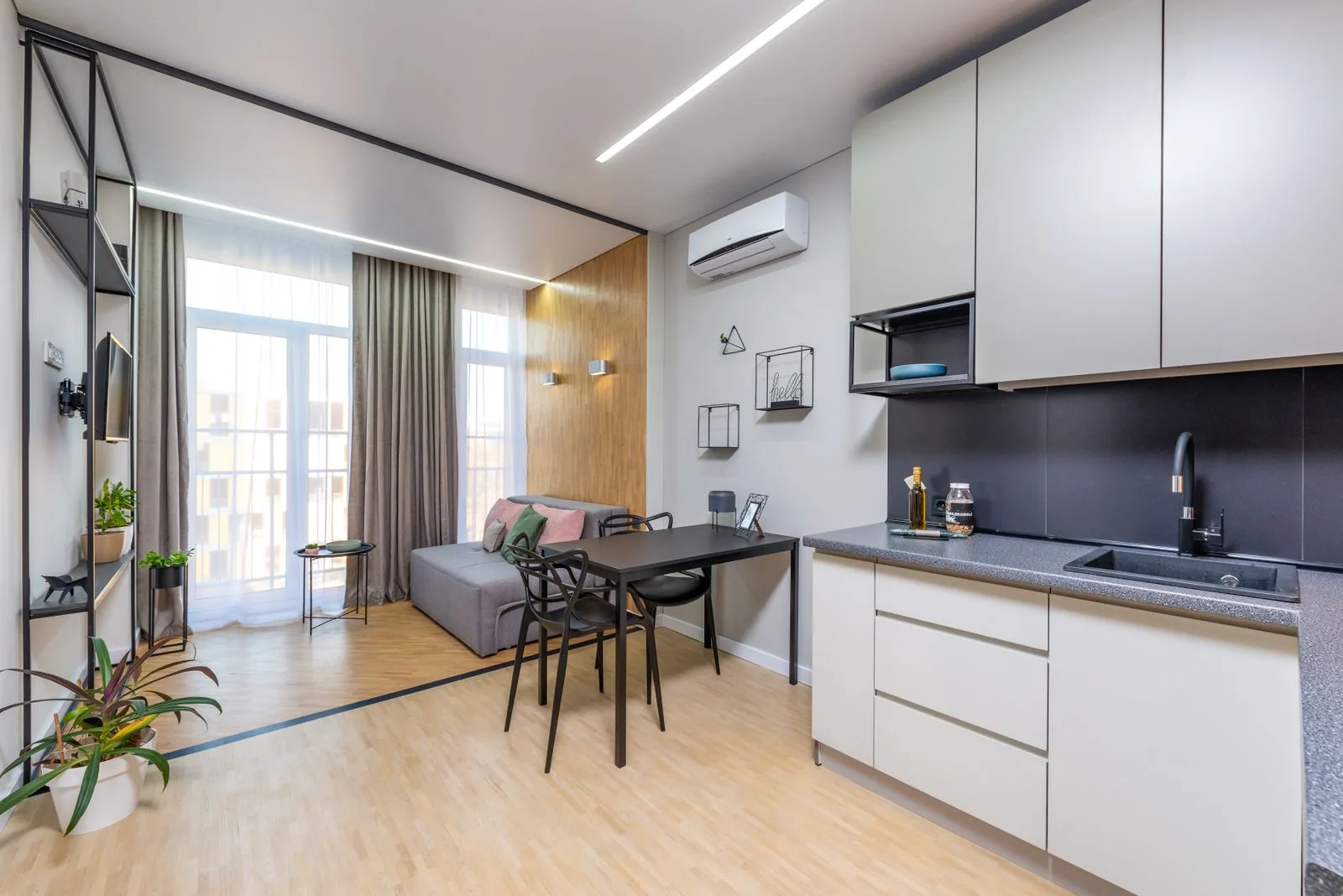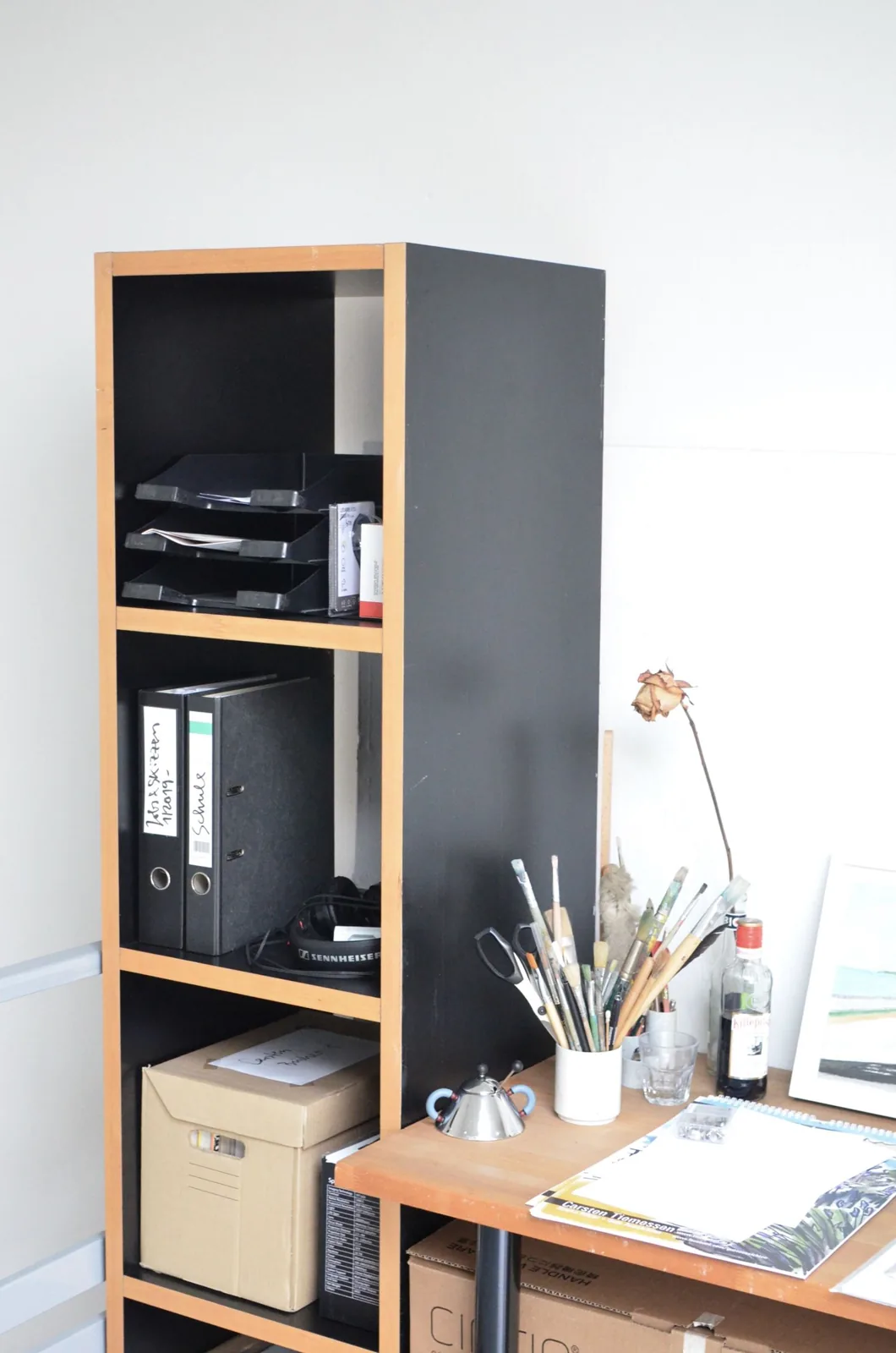
A shared room needs a clear agreement about when work is present and where it goes afterward. Before choosing a desk, identify the equipment that must remain in place and the smaller kit that can move. The useful design is often in the handoff between activities.
Separate portable work from fixed equipment
List what you need during an ordinary work session. Put suitable portable objects in one group, equipment that needs a stable setup in another, and private records in a third. A notebook and a few tools have different requirements from a large monitor or sensitive paperwork. Do not assume everything can be bundled into an open basket because that looks convenient.
Record whether each item is needed every day or only occasionally. This tells you how much storage should sit beside the work area and how much can live elsewhere. IKEA's living-room workspace examples include portable boxes and mixed storage. Use those as possibilities to evaluate against your actual kit, rather than a promise that any dining table or armchair makes an appropriate full-time workstation.
Keep the handoff note beside the stored work kit. List what stays on the surface and what returns to storage, so another household member can understand the agreement without handling private work. Change the note when equipment changes.
Choose the surface for the actual session
Identify whether work happens briefly, regularly, or alongside another person's activity. An occasional portable setup may suit a shared table; a recurring equipment-heavy session may need a more dedicated arrangement. Check the actual support, stability, intended use, and available working space of the furniture. A surface that holds a laptop may still be unsuitable for the wider task.
Consider individual needs and any employer requirements when choosing seating and equipment. This article does not provide an ergonomic assessment or promise that a particular furniture choice improves posture. If work involves specialist tools, sensitive materials, or equipment with ventilation requirements, follow the relevant instructions. The room's domestic role does not reduce those requirements or make improvised supports appropriate.
Plan storage around the end of work
Decide what must happen before the room's next use. For a dining table, you might need to close equipment, return loose tools, place papers in suitable storage, and clear the eating surface. Give each group a specific destination. A portable box needs somewhere to stand when the table is occupied; it should not simply become an obstacle beneath a chair.
Keep private records and equipment secure as required for their actual use. A labeled open shelf can help with identification, but it does not establish confidentiality or security. Avoid using the evening handoff to sort an entire backlog of papers. Routine returns and unresolved decisions are separate jobs. Put pending work in a defined appropriate place, with a next action you can recognize when the session resumes.
Check light, outlets, and the household route
Look at the work material under the lighting used at the actual working time. Consider reflections, shadows, and whether the light needed for work disturbs another room activity. A suitable portable task lamp can be an option, provided its placement and operation follow the product instructions. Do not turn a planning question into an unapproved electrical modification.
Include cords and equipment openings in the floor plan. Keep walking routes and exits clear, and follow electrical and device instructions rather than improvising extensions or coverings. Check the arrangement when someone else passes through carrying normal household objects. The room should remain usable beyond the seated workspace. A tidy overhead photograph cannot reveal every route or interference that appears during an ordinary work session.
Agree on boundaries with the people sharing it
Discuss when the surface is needed for another use and which equipment can remain. A simple agreement might identify a time for the handoff, a place for the portable kit, and an exception for an occasional longer session. These are examples to adapt together, not rules for one person to impose on everyone using the room.
Personal work materials should not be reorganized without permission. Shared storage can have clear allocations so one person's unfinished session does not quietly consume the other person's space. If simultaneous needs repeatedly conflict, reconsider the arrangement itself. More reminders cannot make two incompatible activities fit on one surface at the same moment. A different schedule or location may be more effective than another organizer.
Rehearse packing away before buying more
Try setting up and finishing one ordinary session with the existing suitable furniture. Note where the process stalls: a container does not fit its shelf, a cable is difficult to disconnect according to instructions, or papers have no appropriate destination. Change one specific part and repeat the handoff. This is a suggested household trial, not a claim that the publication tested the arrangement.
Packing away a session without packing away tomorrow
Suppose a table serves one person's computer session and another person's evening craft work. Divide the first setup into fixed equipment, portable supplies and confidential material. Give each a destination before the second activity begins. A single open basket may suit stationery but not sensitive documents or equipment that requires a stable position. Rehearse the reverse transition too: can the next work session begin without unpacking the craft materials? Keep the agreement specific to these two activities. An attractive cabinet that receives neither complete kit has not resolved the shared-room problem.