Meaningful possessions do not all need the same decision. Some belong in everyday view, some need protected storage, and some deserve time before you decide. Begin with a small group and record the stories that make it meaningful, without turning the exercise into a deadline for letting things go.
Choose a small group and a clear boundary
Start with one box or a few related objects, not a whole family collection. Make room to handle them without stacking fragile pieces or separating small parts from their parent objects. Ask who owns the items and who else should be involved. Shared history does not give one person authority to discard another person's possessions.
Decide what you want from this session. You might identify an unlabeled photograph, find a better home for a letter, or choose one object to display. Finishing that bounded task is a worthwhile outcome. If the group carries difficult feelings, stop or return to it another time; an organizing exercise need not force an emotional decision or establish a universal rule for what matters.
Write the story before changing the storage
Record the names, places, occasions, and connections you actually know. Keep uncertainty visible: possibly a family holiday is different from a confirmed date and location. Put the note in a separate record associated with the object, rather than writing on an original or sticking an adhesive label to a delicate surface.
A simple identifier can connect the object, its story, and its location. For example, family-letter-03 can refer to a paper folder and an index entry. Avoid making an elaborate catalog whose upkeep overwhelms the collection. The useful information is what a future reader would need to understand the object without relying entirely on the memory of the person who packed the box.
Separate display, storage, and undecided
Display is a choice about how you want to encounter an object, while keeping is a choice about whether it remains yours. An item can be important without being permanently visible. Give protected storage its own legitimate place rather than treating everything in a box as a failed decorating decision.
For uncertain items, make an identifiable holding group with a clear owner and reason for waiting. It might be awaiting a relative's answer or a material-care question. An optional review reminder can help, but it should not become an automatic disposal date. Keep the group manageable and physically appropriate. An overloaded miscellaneous box can make revisiting the decision harder because it hides both the contents and the reason they were set aside.
Consider a small group containing a letter, a photograph, and a ceramic souvenir from one trip. Their shared story can occupy one index entry while the objects receive different suitable protection and locations. Keeping the narrative together does not require forcing different materials into the same physical box. Cross-reference the locations so the connection remains understandable.
Match protection to the actual material
Paper, photographs, textiles, ceramics, and mixed-material objects have different needs. The Library of Congress distinguishes photographic processes and explains why one enclosure choice does not suit every photograph. Its paper guidance also notes that some media require special consideration. Do not assume a clear plastic sleeve or a box marked archival is automatically suitable for every keepsake.
For papers, avoid damaging fasteners, adhesive tape, and cramped folding. Keep fragile surfaces from rubbing against other objects. With unknown, deteriorating, or valuable materials, seek appropriate conservation advice before cleaning, flattening, or repairing them. This article is a decision and indexing method; it is not a treatment manual. Existing damage should be recorded, not disguised by an improvised organizing repair.
Choose a location you can describe and revisit
Look beyond whether a box fits. Consider the suitability of the environment, access, risk of leaks, and how the items will be supported. Library preservation guidance favors stable conditions and avoiding environmental extremes for paper collections. A convenient attic corner is not necessarily a good long-term home for family documents.
Write the actual location in your index and use a container identifier that can be read without unpacking everything. Keep heavy or awkward groups manageable according to the container and shelf requirements. Leave enough space to retrieve an item without pulling out a fragile stack. Revisit the location after a move or a change in room use; yesterday's suitable shelf may no longer have the same conditions or access.
Use copies to share, without erasing originals
A photograph or scan can make a story easier to share and reduce unnecessary handling of a delicate original. Check that the copy is readable, named clearly, and connected with its description. Maintain another appropriate copy of important digital records rather than relying on one device or an unnamed camera roll.
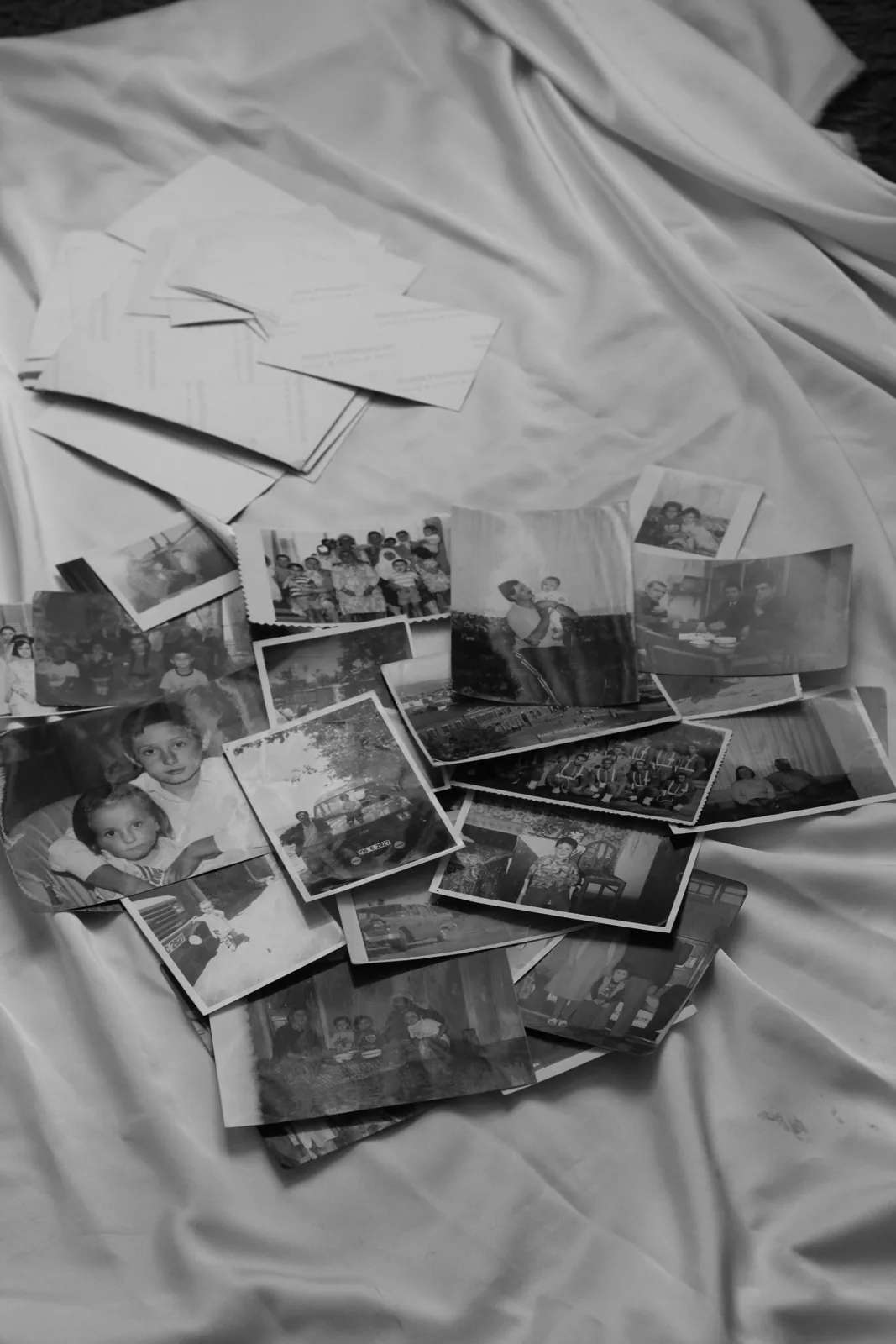
A photograph with a story on its reverse
For a family photograph with writing on the back, connect the front image, reverse information and the story supplied by its owner under one identifier. Keep a reference copy available for sharing while the original has suitable storage. Do not place an adhesive label on the photograph to make that connection. LOC's paper guidance supports avoiding self-adhesive additions to valued originals; its photographic leaflet explains why the actual material matters. If relatives disagree about the story, preserve the different accounts as accounts rather than silently rewriting one into a confirmed fact.