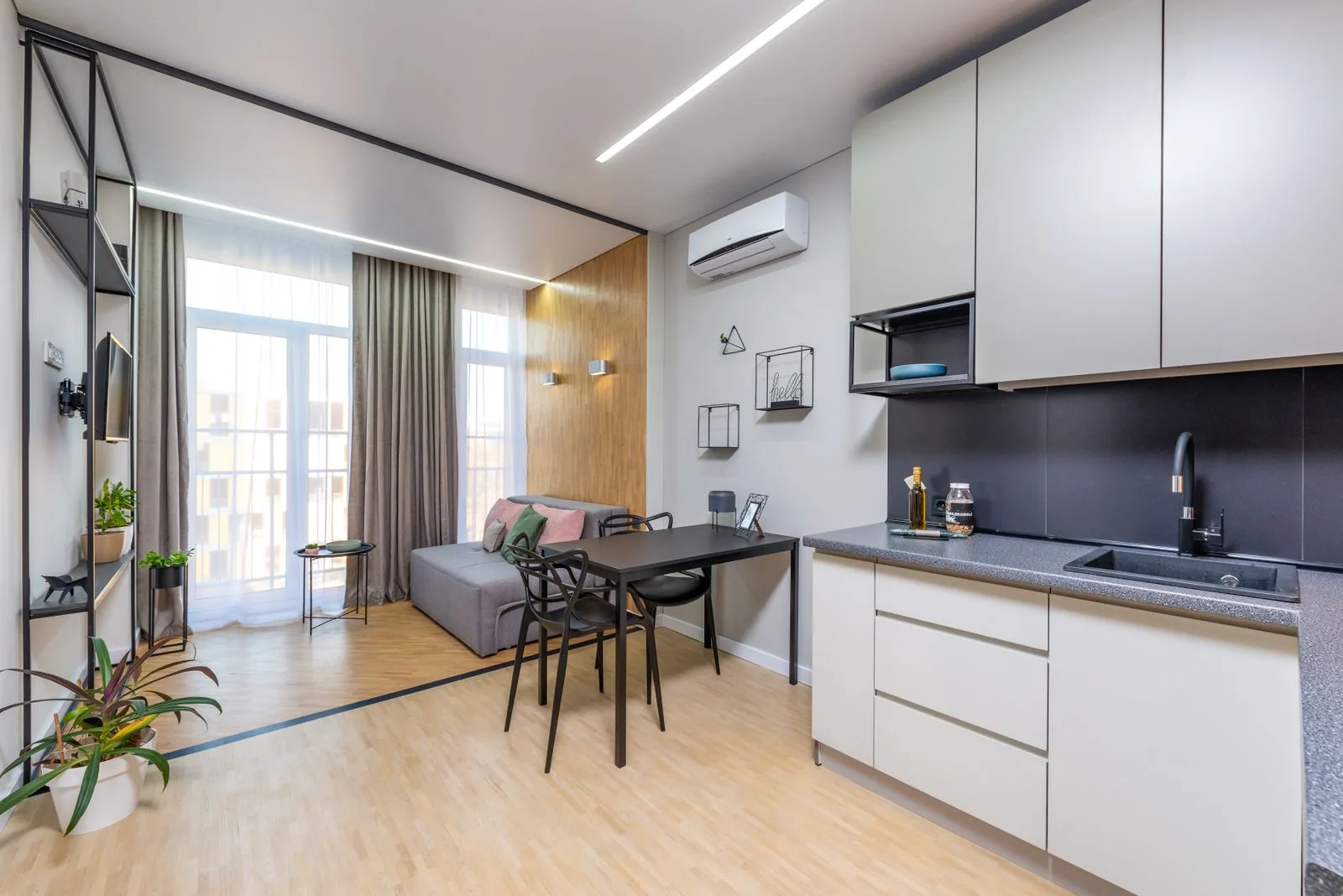
Before ordering a curtain, make a brief that describes the window, how it opens, what needs to remain accessible, and which mounting is permitted. Fabric length is only one part of the decision. The complete arrangement has to work when the curtains are open, closed, and being cared for.
Define the practical job of the covering
Write down what you want to change: privacy, control of incoming light, a decorative finish, or a combination. Describe when it matters and from which view. A sheer fabric may look appealing but should not be assumed to provide the same privacy under every lighting condition. Check the actual product description and compare its intended function with your need.
Keep existing satisfactory features in mind. An existing blind may already serve the main functional job, leaving a curtain as an optional visual addition. Conversely, replacing a decorative panel with another decorative panel may not resolve a specific light-control problem. Naming the job before choosing material helps avoid a purchase that changes the appearance while leaving the original difficulty untouched.
Record the opening and its surroundings
Measure the window and note how every moving part operates. Include handles, sills, nearby furniture, radiators, vents, and anything that must remain accessible. Photograph the arrangement for your own reference, then make a simple dimensioned sketch. Keep measured values separate from assumptions about where a new rod or track might eventually go.
The IKEA length guide explicitly considers the window opening and nearby objects when planning a solution. Use that as a prompt to inspect your actual room. Do not infer a safe clearance around heat sources or ventilation from a decorative photograph. Follow the relevant equipment and covering instructions, and obtain advice if an obstruction or required access makes the intended position uncertain.
Confirm the mounting before choosing the drop
Identify whether the existing fitting will stay or whether a change is being considered. A curtain's hanging point affects its finished drop, so a measurement from an imagined rail can lead to the wrong length. Check what the property permits and which installation the actual product requires before ordering fabric or hardware.
Do not assume a tension rod or adhesive hook is appropriate merely because it avoids drilling. Surface condition, load, span, use, and the product instructions still matter. Permission and compatibility are separate questions: an allowed change can still be unsuitable for the chosen product. This guide is a planning brief, not an installation procedure, lease interpretation, or guarantee of damage-free fitting and removal.
Measure coverage and the open position
Consider where the fabric goes when drawn aside. A covering needs enough appropriate support and space to operate without blocking the window or colliding with furniture. Check product guidance for panel widths, fullness, hardware compatibility, and any stack-back requirements. Window width alone may not answer how much finished fabric the arrangement needs.
For length, compare the actual hanging point with the intended endpoint and the surrounding activity. A floor-length appearance is one option, not an obligation. Fabric that pools on the floor changes cleaning and movement, while a shorter covering changes the visual effect. Choose within the product's requirements and the room's practical constraints rather than copying a standard measurement from another window.
Check operation and household access
Imagine opening the window, reaching the covering control, drawing the fabric, and cleaning the surrounding area. Each action should remain practical. Include the people who use the room and any access needs. A suitable appearance does not establish that the control is reachable or that the covering can be operated without moving several pieces of furniture.
Follow all product safety guidance, including any specific requirements concerning cords, chains, children, pets, and fixing points. Do not improvise replacements for required components. If an existing covering is damaged or missing necessary safety parts, raise that issue with the appropriate responsible person. Adding a decorative layer does not resolve a defect in the underlying system.
Keep care and reversibility in the purchase brief
Read the actual textile care label before buying. A large curtain may require a method or capacity unavailable in the home, even if its fiber sounds familiar. Check whether alterations are needed and how they affect the intended finished size. Keep the original product information and any approved property-change record together.
If replacing existing fittings or coverings with permission, label and store the originals appropriately. Do not discard them simply because the new arrangement looks better. A complete brief now records the function, opening, mounting permission, measurements, operation, care, and original components. Use it to compare products and ask focused questions. The goal is an arrangement that works in this rental, with fewer assumptions carried into the order.
A curtain proposal above a working desk
For a window above a desk, record the handle movement, existing blind, proposed hanging point and where drawn-aside fabric would sit. Check each against the desk in use, rather than measuring drop alone. In a home with young children, CPSC recommends cordless window coverings; another decorative layer does not remove the hazard of existing cords. Resolve safety and permitted installation before ordering. A shorter or different suitable arrangement may answer the room better than the floor-length photograph that started the search. Keep the unanswered mounting question attached to the purchase decision.