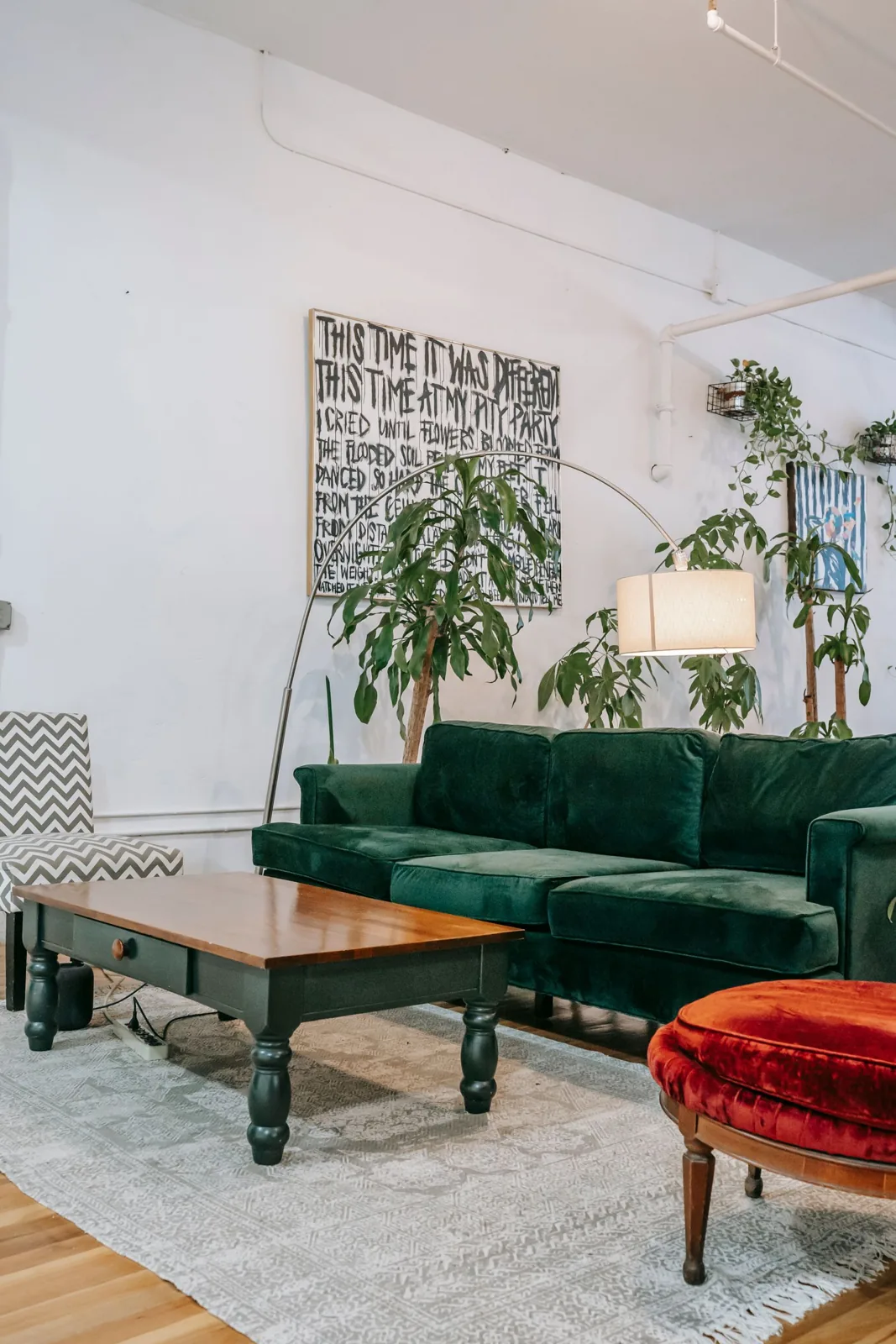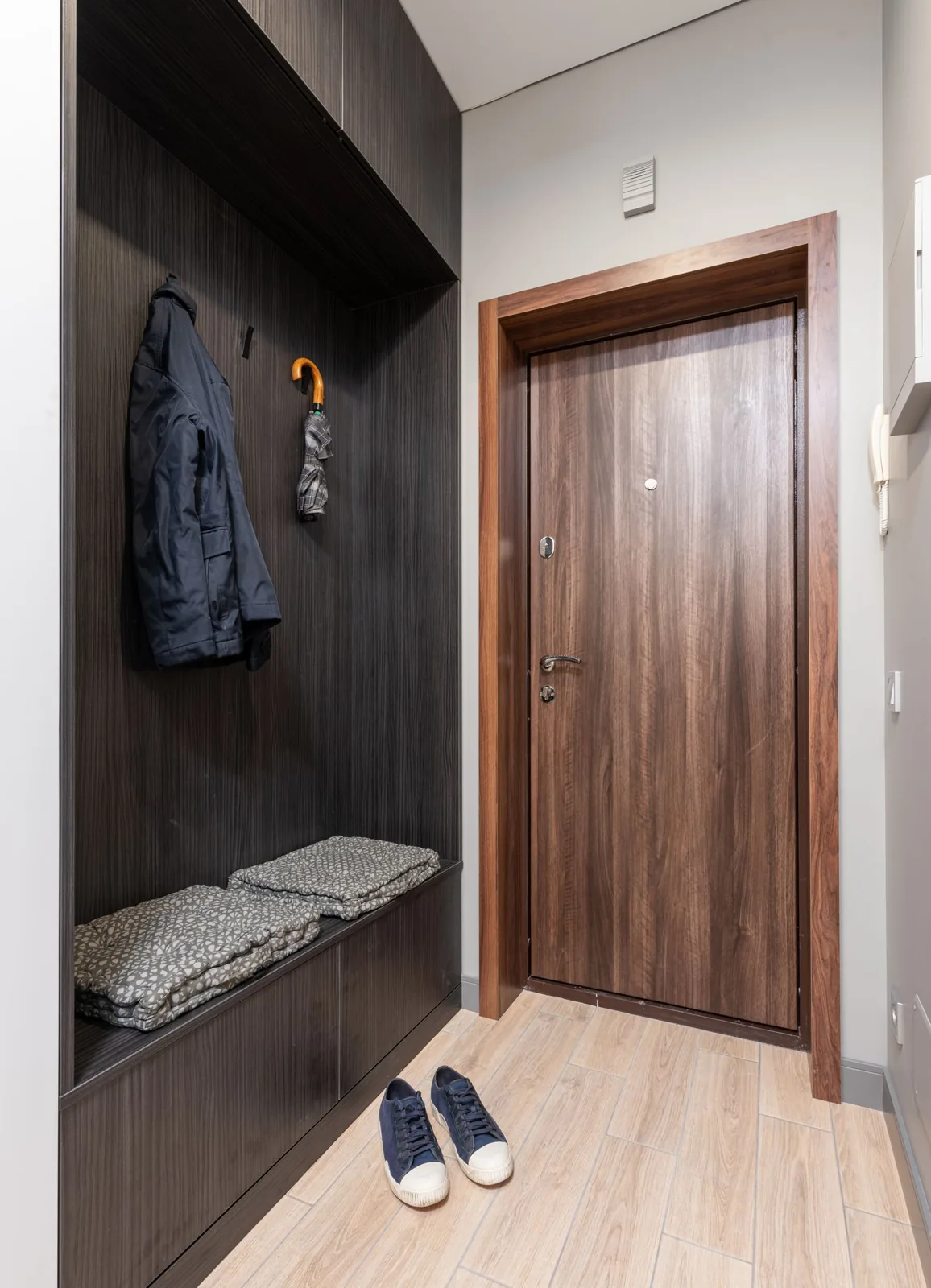
When the walls and floor are staying as they are, textiles offer movable choices. Start with the colors already in the room and the jobs a textile needs to perform. A coherent room can grow from a few considered additions rather than a complete matching set.
Begin with the surfaces that stay
Look at the room in ordinary daylight and with the lamps you normally use. Note the large fixed surfaces: flooring, walls, kitchen fronts if visible, and furniture you plan to keep. A warm-looking floor or cool-looking wall can change how a textile appears beside it. This is a visual comparison to make in the actual room, not a universal formula for color matching.
Choose one existing detail you would like to connect with. It might be a tone in a print, the wood of a chair, or a color in a favorite blanket. Starting from something present gives the new choices a reference. You do not need to correct every contrast or conceal every rental feature. Decide which parts can simply remain the room's background.
Choose the first textile by its useful job
Ask what the room needs before choosing a pattern. A cushion cover can refresh an existing insert; a blanket may be useful on a seat; a suitable rug may help define an area. IKEA's textile guidance describes several different functions, while its studio guidance suggests a coherent visual language. Combine those ideas by giving the first purchase one practical job and one visual relationship.
Do not add a textile solely to fill an empty-looking place. Extra cushions need somewhere to go when someone sits, and a throw needs suitable care and storage. Window treatments and rugs introduce separate questions about fit, operation, and installation. Check those requirements before treating them as effortless decorative changes. A small movable item can be a better starting point when the larger decisions remain unresolved.
Make a palette from relationships, not quotas
Select a main textile color that works with the existing room and one optional accent you enjoy. There is no required number of colors or correct percentage split here. You might repeat one muted green across a cushion and a small print, or connect several different tones through a similar background color. The relationship matters more than exact matching.
If possible, compare a real sample in the room before buying a larger piece. Check the sample against the furniture from the places where you spend time, rather than only holding it next to a wall. Product photographs can be affected by lighting and screens. A choice that looks different at home is a reason to reassess the combination, not evidence that you selected an objectively wrong color.
Compare texture and pattern at their real scale
A small patterned swatch does not show how repetition will look across a large curtain or cover. Look for a full-product view and check the pattern scale against nearby objects. Try pairing a busier textile with a quieter surface so each can be understood. This is a styling option, not a requirement to make a rental look minimal.
Texture also changes practical use. Consider whether a weave catches on things, whether a cover can be removed, and whether the item is suitable for the household's actual activities. Avoid claiming that a particular texture will improve health, acoustics, or comfort in a measurable way without product evidence. Choose it because its look, feel, and documented use requirements suit the job you have identified.
Let care and permission narrow the choices
Read the exact care label before committing to a textile, especially a large one. A washable fiber does not establish that a finished item can go through your machine or dryer. Check dimensions, care method, and access to any required service. The maintenance requirement belongs in the purchase decision, not in a surprise after the first spill.
If adding curtains or another mounted textile, confirm what the property permits and what the manufacturer requires. Do not assume a tension fitting or adhesive product is suitable for every surface or guarantees damage-free removal. Keep original fittings and document any approved changes. A portable decorative object can move with you, but its installation and daily operation still need to be appropriate for this home.
Add one layer, then live with the room
Put the first choice in place and use the room normally before adding another. Notice whether the seat remains comfortable to use, whether the palette still appeals in different light, and whether the item is easy to care for. If something feels crowded, removing an accessory can be a useful styling decision. More layers are not automatically more personal.
A dark sofa and two possible cushion covers
Compare two suitable covers against the sofa already in the room: one repeats a color in an existing picture, while the other introduces a new accent. View the actual sample at its normal scale and check its care instructions before choosing. GINETEX's care overview helps distinguish washing from drying permissions; color alone cannot settle that choice. Keep the cover that adds a useful relationship without requiring replacement curtains or a rug to justify it. If neither helps, retain the existing arrangement. This example treats the room's fixed pieces as the starting palette rather than a shopping list.