Household paper becomes easier to manage when each sheet has a next destination. A small inbox can capture incoming items, but it needs a route onward. Separate things that require a response from things you retain for reference, and make the next review a specific event.
Give incoming paper one recognizable landing place
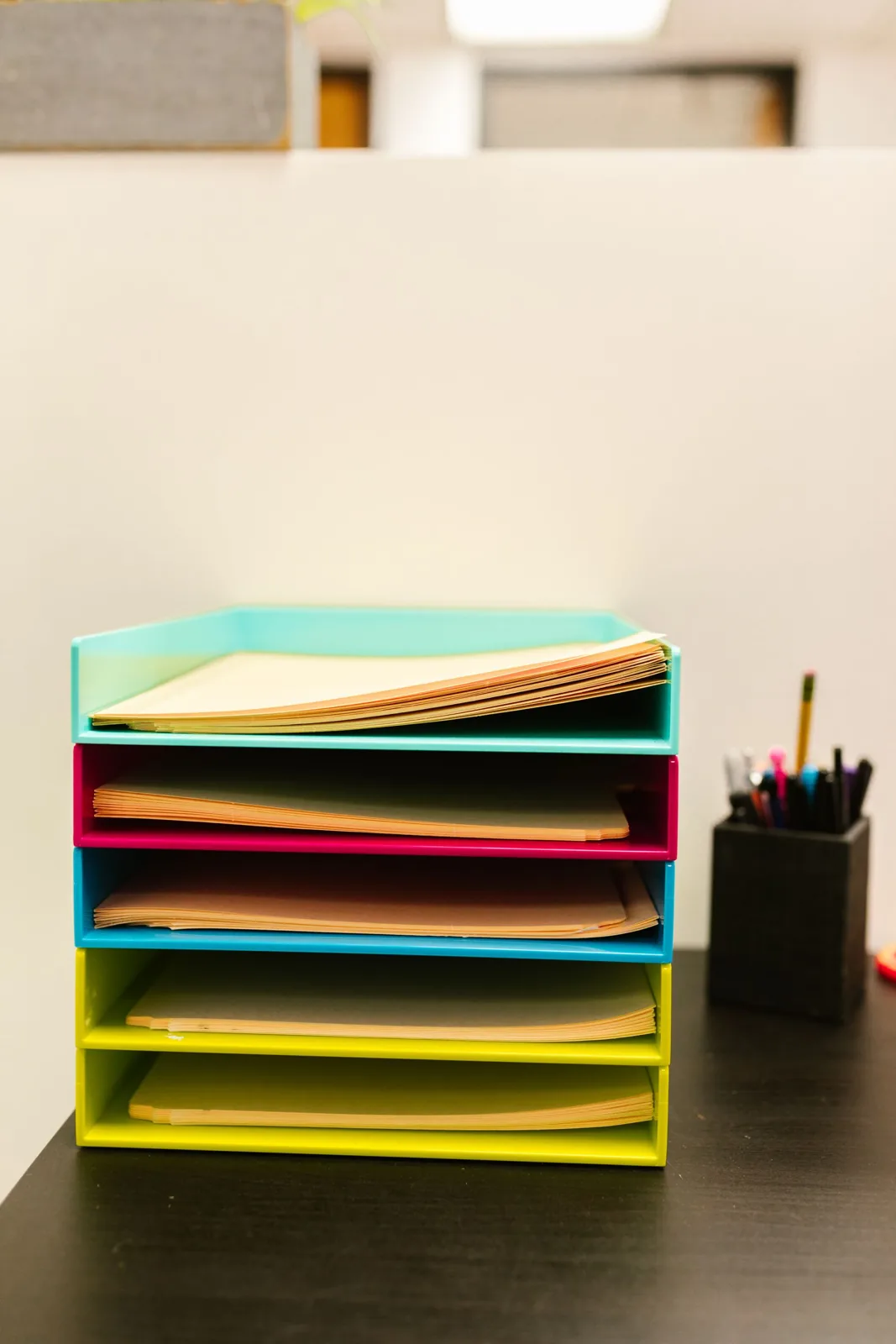
Choose a tray or folder that can hold the ordinary papers arriving at home. Put it somewhere the people using it can reach, while keeping private information out of public view. Its job is temporary collection. It should not quietly become the permanent home for everything from appointment letters to appliance instructions.
Start with new arrivals rather than emptying every old drawer. Place one recent item through the proposed route and see what information you need. Opening another person's correspondence, destroying shared documents, or reorganizing someone else's private records requires their agreement. A household system works better when its boundaries are understood than when one person creates an impressive but unfamiliar filing scheme.
A single paper can belong to a household record while its action reminder belongs elsewhere. Keep the reminder linked to the document rather than leaving the only copy on a busy table. This avoids making visibility depend on keeping the entire document permanently in view.
Decide what the sheet asks you to do
Read each item and name its task in a few words. Return a form, confirm a date, ask a question, or keep a record are different outcomes. An envelope containing several documents may need more than one destination; retain connected pages together so separating them does not remove important context.
If action is needed, note the actual deadline and the next practical step. Do not treat the scheduled inbox review as permission to ignore something urgent. This article supplies an organizing process, not legal, financial, or medical retention advice. When a document has formal requirements, follow the issuing organization and appropriate professional guidance rather than applying a blanket household disposal rule.
Make action and waiting visibly different
An action folder holds items whose next step belongs to you. A waiting folder holds items where a response has already been requested or a process is underway. Add a short note showing what happened and when you intend to follow up. Otherwise, the same letter may be repeatedly reread without any useful decision.
Keep the confirmation with the relevant reference, and record the promised response date if one was supplied. Do not invent a deadline just to fill the system. If a date is unknown, write a reasonable personal check-in reminder and label it as your reminder.
Try finding a completed household form from a question such as where is the confirmation, rather than from its filename. If the route leads only to an empty action folder, add the connection to the retained record. An inbox can be perfectly clear while the final reference system remains difficult to search.
File records by how you would look for them
Choose broad names that match real questions: a property, appliance, school, or provider name may be more useful than a decorative category. IKEA's document-storage guide illustrates folders, files, and trays. The container is secondary to knowing which papers belong together and why you would retrieve them later.
Keep a short index if records are divided between physical and digital locations. A note can say where the original is and where a reference copy is stored. Scanning does not automatically make an original disposable or satisfy an organization's requirements. Confirm those requirements before discarding anything, and protect sensitive files with a storage and access approach appropriate to the information.
Treat important old paper differently from daily mail
A family letter, drawing, or historic document may require material care as well as a filing label. The Library of Congress advises careful handling, clean work areas, supportive enclosures, and avoiding damaging fasteners or adhesives for works on paper. Do not attach a sticky organizing label directly to a valued original.
Keep those items out of the busy inbox and avoid forcing fragile sheets into an undersized folder. A storage product advertised for office paperwork is not automatically suitable for long-term preservation. If media is flaking, paper is brittle, or an item has unusual condition problems, seek conservation guidance rather than treating ordinary filing supplies as a repair. Your index can reference its separate protected location.
Review decisions, then close the inbox
Choose a review point linked to a real opportunity to act. At that review, check new arrivals, outstanding actions, and waiting items. Move completed records to their intended home. Close the session when those decisions are made; rearranging the folders repeatedly is not the same as completing the task written on a sheet.
A service letter that changes status
Trace an ordinary service letter from arrival to a question submitted through the provider's channel. It begins in the action group, then moves to waiting with the actual submission reference and a follow-up reminder. When a reply arrives, retain connected pages together where the household would look for that service record. The inbox can now be empty without the matter being forgotten. Keep a personal reminder distinguishable from a deadline imposed by the provider. This status trail is more useful than writing urgent on the folder while leaving the next action undefined.