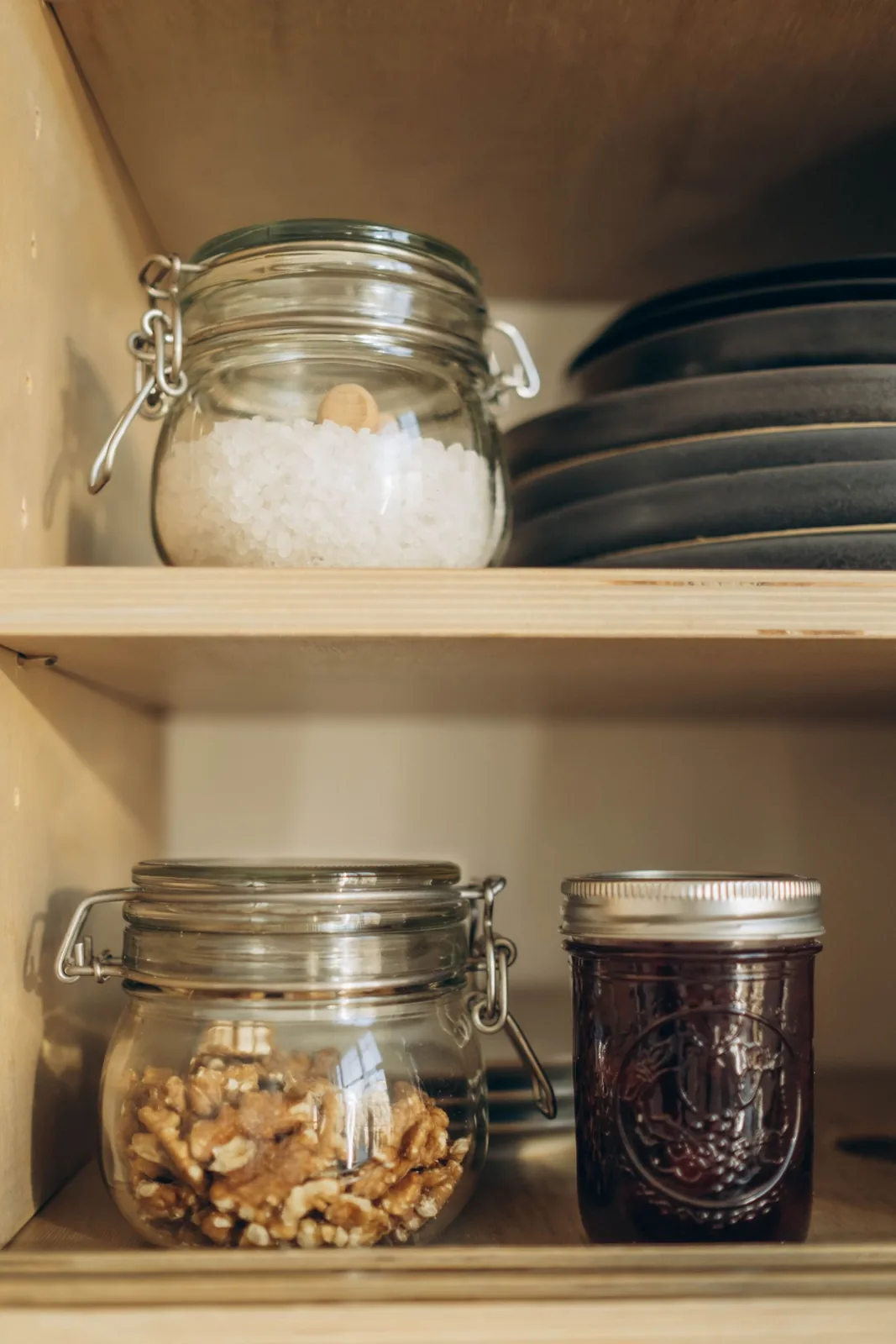
A useful pantry inventory answers two questions: what is already here, and what do we actually need next? Begin with one shelf and the packaging you have. The aim is a dependable shopping reference, rather than a row of identical jars that requires constant upkeep.
Choose a boundary you can finish
Pick a shelf, cupboard, or small group such as breakfast supplies. Leave the rest of the kitchen alone while you learn how much recording is useful. Set out enough space to inspect the selected packages without mixing them with unrelated possessions. Keep food in conditions appropriate to its own label throughout the exercise.
Write a rough list of product names and package quantities. Precision should serve a decision: two unopened packets and one open packet may be more useful than an estimated number of grams. You are making a household stock reference, not a nutritional calculation or a food-safety assessment. Do not use the inventory to decide whether a damaged, unidentifiable, or questionable product is safe.
Keep similar packages distinguishable when their uses differ. A shared basket can still contain separate labeled products; grouping is not permission to combine their contents. Write only the shopping detail you need, and leave the original instructions available.
Keep the information that came with the food
Original packaging carries more than a product name. Preserve its ingredient, allergen, date, batch, preparation, and storage information. An attractive container does not replace those details. Keeping a packet intact inside a suitable grouping bin is one way to improve access without transferring the food at all.
If you choose an appropriate food-storage container, keep the original information reliably associated with that particular contents. Do not top up a partly used container with another batch and assume one old label describes both. Follow the product and container instructions. This guide does not reinterpret date wording, extend shelf life, or supply general storage temperatures; seek the relevant official food guidance when those questions arise.
Separate the open package from its backup
Group products by the way you look for them. Breakfast, baking, or evening meal ingredients may be useful names, but a household that shops differently can use different groups. IKEA pantry examples emphasize visibility and keeping commonly used supplies accessible. Apply that principle to a shelf you already own before considering accessories.
Give open and unopened packages distinguishable places where this suits their instructions. For example, the current pasta packet can remain at the front of its group with backups visible behind it. Avoid unstable stacks or arrangements that hide labels, exceed shelf limits, or make heavy containers awkward to retrieve.
For a shared shelf, agree whether the list describes everyone’s food or only common supplies. A personal package can remain physically near shared stock without becoming available to all. Mark that distinction in the grouping, so a replenishment check does not become an unintended ownership decision.
Make a list at the point a decision happens
Choose one place to record replenishment: a paper list near the cupboard or a shared digital note. Add an item when a relevant package is used up or reaches your household's chosen reorder point. A long duplicate database can become less trustworthy than a short list that people actually update.
Record enough detail to distinguish products that matter to the household. If a particular type, size, or ingredient requirement is important, a generic word such as flour may be insufficient. Check the actual package again while shopping rather than relying on an old note for allergy or suitability decisions. The inventory is a reminder to inspect, not a substitute for reading current labels.
Check stock before planning the next shop
Before making a shopping list, look through the selected group and compare it with intended meals or other uses. Mark what is present, what is already open, and what genuinely needs replacing. Do not buy a backup only to make a container look full; decide the quantity according to space, use, and the relevant storage requirements.
A simple example is a baking shelf containing an open bag of sugar and an unopened spare. The list can say sugar: open plus one spare, with no purchase needed for the next planned bake. If nobody updates that line during use, remove it and rely on a quick physical check instead. The better system is the one whose information stays connected to reality.
Choose organizers only after a retrieval trial
Try getting out ingredients and putting the remaining packages away. Notice whether the problem is visibility, reach, grouping, or capacity. A shallow bin may help keep small packets together, while a deep decorative basket may conceal exactly what you need to see. Measure the actual shelf and check the proposed organizer's intended use.
An open packet, a backup and a shopping note
On one shelf, identify an open pasta packet and its unopened backup. Put the current package where it can be recognized without hiding the backup, preserving both products' original information. A shopping note should describe the next need, not merely copy everything visible. If another person adds a third packet, ask whether the stock check or list update was missed before buying new containers. The example ends when someone can identify the package in use, see the reserve and understand whether another purchase is actually needed. It does not prescribe storage beyond the food's instructions.