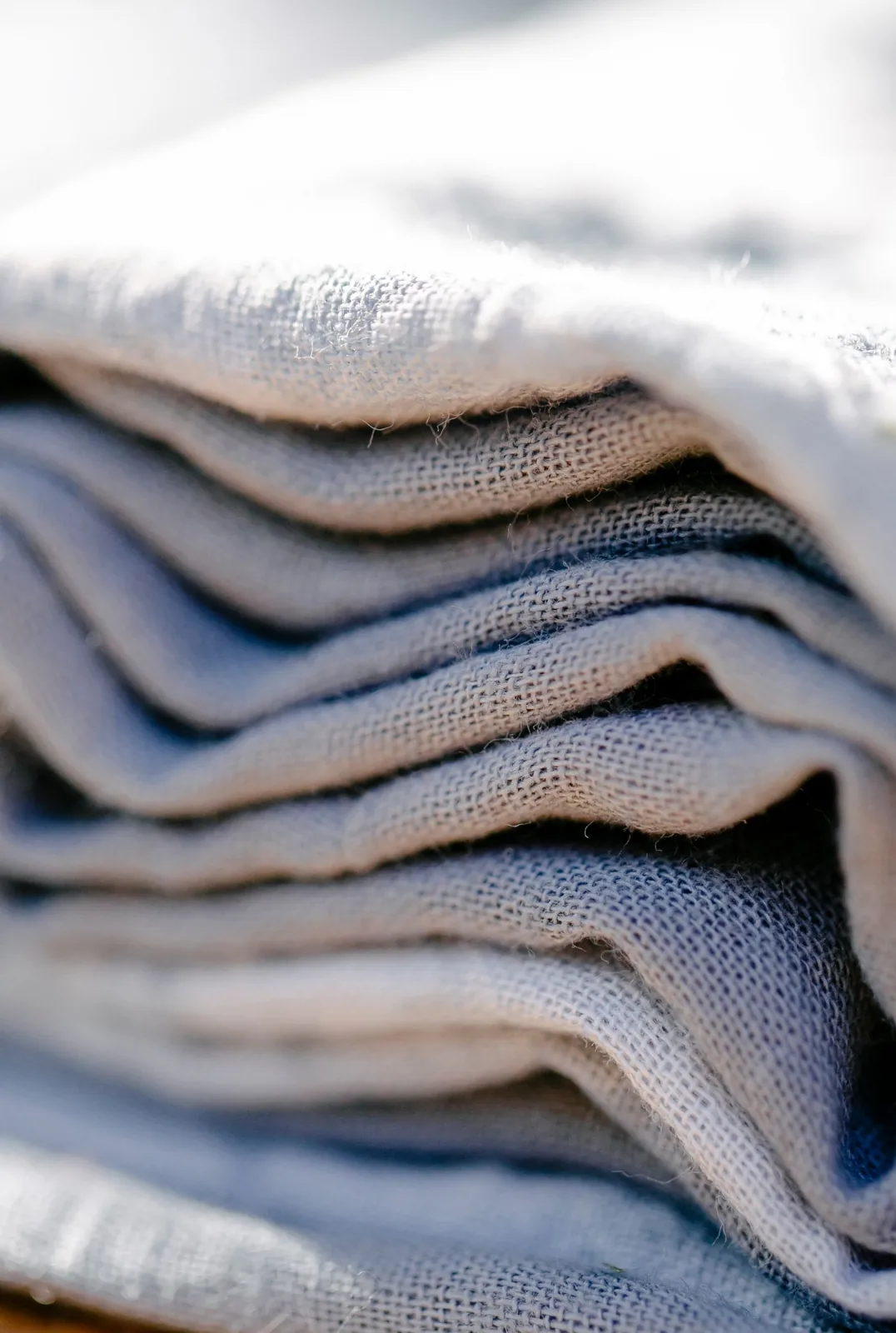
The useful unit in a linen cupboard is often a complete change, rather than a stack of identical-looking rectangles. Organize around the beds, towels, and other textiles you actually use. Then leave enough working space to retrieve one group and return the next clean load.
Identify the sets before choosing a folding method
List the beds and the sizes of linen used with them. Check the labels or actual fit when two pieces look similar. Add the pillowcase sizes and any separate guest arrangement. A pile sorted only by color can conceal an incomplete set or a sheet that belongs to a different mattress. The first useful task is identifying what goes together.
Group a normal complete change for each use. That does not mean every household must store the same number of sets or package them in the same way. Laundry turnaround, drying access, household size, and individual needs differ. IKEA's linen guide suggests grouping by size, style, and use; adapt those distinctions to the questions you actually ask when reaching into the cupboard.
Keep a short size key if labels use different regional names. Record the mattress or intended use beside the set rather than assuming that two pieces labeled double are interchangeable. That small record helps a guest or another household member select the right linen without unfolding every sheet.
Give incomplete and uncertain pieces a separate decision
When you find an unmatched pillowcase or an unfamiliar sheet, avoid hiding it in the nearest complete stack. Set it aside in a bounded review group and check whether its partner is in use or awaiting laundry. This prevents a temporary mismatch from becoming a permanent organizing category that no one understands.
Condition matters too. Follow the textile's care instructions and decide separately what to do with damaged or unsuitable pieces. Do not assume a donation organization accepts every used textile. Confirm an appropriate recipient or disposal route before moving items into an outgoing bag. This guide concerns household organization, not specialist cleaning or preservation of valuable textiles; those require suitable material-specific guidance.
Allocate shelves by the next change
Place the groups used most often where the people changing the beds can reach them conveniently. Occasional linen can occupy less convenient suitable space, provided access remains safe. Do not put difficult or heavy loads overhead simply because they are rarely needed. Consider who returns clean laundry as well as who takes it out.
Try pulling one complete group out without lifting several others. If the stack collapses or requires both arms to hold neighboring pieces, reduce its height or change the grouping. Shelf depth can also hide a second row. Where a deeper area is used, make its contents identifiable rather than assuming that everyone will remember what sits behind the visible stack.
Choose a fold that preserves the useful information
A consistent fold can make a shelf easier to use, but precision is optional. Start with the folded size that suits the compartment and leaves the set recognizable. A fitted sheet does not need to resemble a display sample to be stored successfully. Avoid making the system dependent on a technique that one household member cannot reasonably repeat.
You can place suitable matching pieces together or use an appropriate existing container. Keep labels visible where they answer a real question, such as bed size or guest use. Do not cover or discard care labels merely to make a bundle look neat. Check that any container suits clean, fully dry textiles and can be handled comfortably when loaded. A matching exterior is less important than a useful interior.
Reserve capacity for the returning load
An organized cupboard has to accept the textiles that are currently on the bed or in the laundry. Count those in the plan. A shelf that fits everything visible on sorting day may overflow when the next load comes back. Keep a clear destination for that return instead of using every available gap for unrelated possessions.
Where drying space or laundry timing creates a temporary queue, identify it honestly. Do not seal damp textiles into storage to finish the task sooner. Follow care instructions and make sure the item is ready for its chosen storage environment. If the available cupboard cannot hold the actual collection accessibly, consider a different suitable location or a separate decision about the collection, rather than compressing it until retrieval becomes difficult.
Review after a complete laundry cycle
Use the arrangement through taking out a set, washing according to its instructions, drying, and returning it. Notice specific points of confusion: two sizes look identical, a container is inconvenient to carry, or the shelf lacks room when all pieces are home. Change that detail rather than refolding the entire cupboard every time.
Two similar sets that belong to different beds
Imagine two beds with similar-looking covers but different sizes. Keep each usable change recognizable through its own label, fold orientation or appropriate grouping, without relying on color alone. Test taking the intended set while the other remains in place, then returning it after its permitted care. The GINETEX overview is useful when checking differing wash and drying instructions; a shared shelf does not make them one laundry load. If a guest set belongs elsewhere, show that destination on the cupboard map rather than leaving an apparently incomplete stack for someone else to solve.