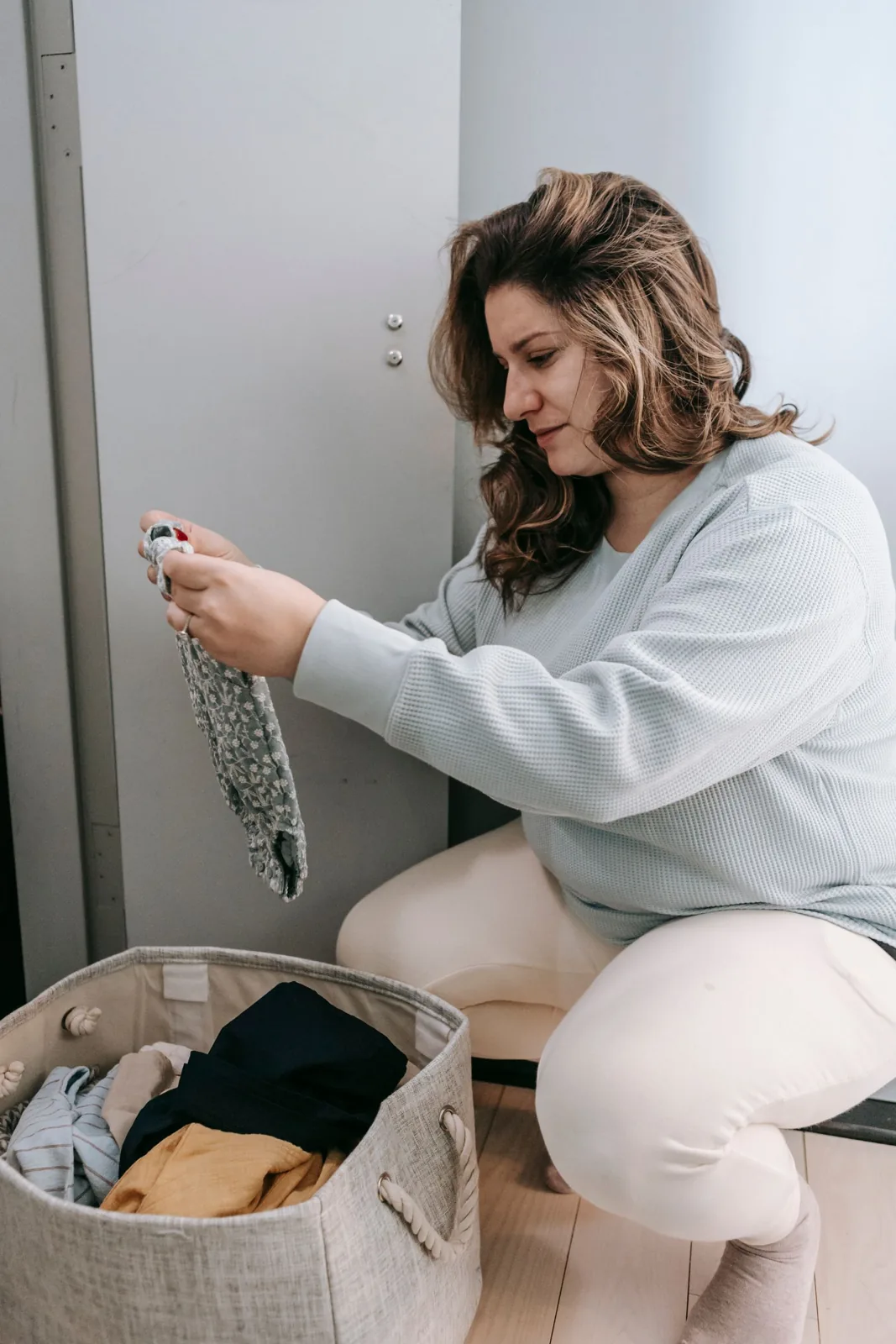
Laundry occupies more than the washing machine. It waits, travels, dries, gets folded, and returns to storage. Map those stages in your small home before adding another basket. The useful question is where the next load will go when the previous one is still in progress.
Trace one load from collection to return
Choose an ordinary load and write its physical route: collection, sorting, washing, drying, finishing, and storage. Include trips outside the home if you use a shared laundry or laundromat. Record where each stage actually happens rather than assuming the washing machine defines the whole routine.
Look for the place where clothes wait longest. It may be a drying rack that blocks a cupboard, a clean basket with mixed owners, or a drawer unable to receive the finished items. Identify that stage before selecting equipment. A larger dirty-clothes basket can hold more waiting laundry without solving a bottleneck in drying or putting away. The route needs a workable destination at every handoff.
For an outside laundry trip, include the clean return journey in the route. A suitable carrying bag, a place to unload, and an available storage destination matter as much as reaching the machines. Keep the practical plan tied to the facilities you actually use, rather than designing around equipment absent from your home.
Collect without making sorting harder
Choose a collection point that suits the people using it and keeps ordinary routes clear. Separate items that need different handling where practical, but avoid buying a basket for every possible category. The care label governs treatment; the collection label is simply a reminder to inspect and sort appropriately before washing.
IKEA’s laundry examples describe grouping by care needs or owner and using portable containers between stages. Treat those as options to compare. A wheeled bag must still suit the floor, thresholds, load, and available storage. Do not leave damp items enclosed as if all waiting laundry has identical needs. Follow the actual textile and product instructions, and resolve unsuitable conditions instead of hiding them behind a lid.
Check drying capacity before starting a load
Read the relevant care instructions and know which items require a particular drying method. Compare that need with the space and equipment available now. If the suitable rack is occupied, starting another load may simply create a wet waiting stage. Plan the sequence rather than assuming everything can use a dryer.
Keep drying arrangements appropriate to the room, building rules, product requirements, and conditions. Do not obstruct exits, place textiles over heaters, or improvise a fitting from furniture not intended for the task. This article does not provide ventilation engineering or appliance-installation instructions. If drying repeatedly creates unsuitable moisture or access problems, seek appropriate advice and reconsider the location or service arrangement.
Keep a missing-button or repair decision separate from ordinary clothes ready to return. Otherwise one unresolved garment can hold up an entire clean basket.
Give clean laundry a distinct landing stage
Choose a clean, suitable surface or container for finished laundry. Keep it distinguishable from items awaiting washing so the next person does not have to guess the status. A basket can be useful for transport, but decide whether it is a brief handoff or the final storage destination.
For example, shared towels can go directly to their agreed shelf, while personal clothing may be separated by owner for return. Agree who performs that final stage and when it is reasonable to expect it. Do not impose a folding method on another person merely to make a shelf uniform. The practical standard is that clothes can be identified, retrieved, and returned in a way the users can maintain.
Keep equipment useful when the room changes jobs
In a kitchen or bathroom laundry area, the room has other responsibilities. IKEA’s compact kitchen example shows portable bags and stowable racks. Compare the open working footprint and the packed footprint, including the route used to carry the load. A foldable object is helpful only if you can operate and store it appropriately.
Keep laundry products in their original labeled packaging and stored according to their instructions, with appropriate protection for children and pets. A matching jar is not a reason to remove product identification or safety information. Keep food preparation and other room tasks suitably separated from the laundry process. Decorative integration should follow the practical requirements rather than conceal them.
Change the slow stage and repeat the route
Try one adjustment to the actual bottleneck: a clearer owner handoff, a suitable finishing surface, a different load sequence, or a storage destination that can receive the clothes. Observe the next ordinary load before expanding the system. This is a proposed comparison, not a claim that a particular basket or schedule has been tested in your home.
When drying, rather than washing, is the bottleneck
Sketch one load from collection through its permitted drying method to storage. If the available drying arrangement is still occupied, identify what will happen to the next load before starting it. Check each textile's instructions; GINETEX treats washing and drying as distinct permissions. A new collection basket cannot create the missing drying capacity. The useful adjustment might be a different compatible sequence or an appropriate smaller workload within appliance guidance. Follow the clothes all the way back to their destination, because a clear machine and several unidentified clean piles still leave the household's laundry route unfinished.