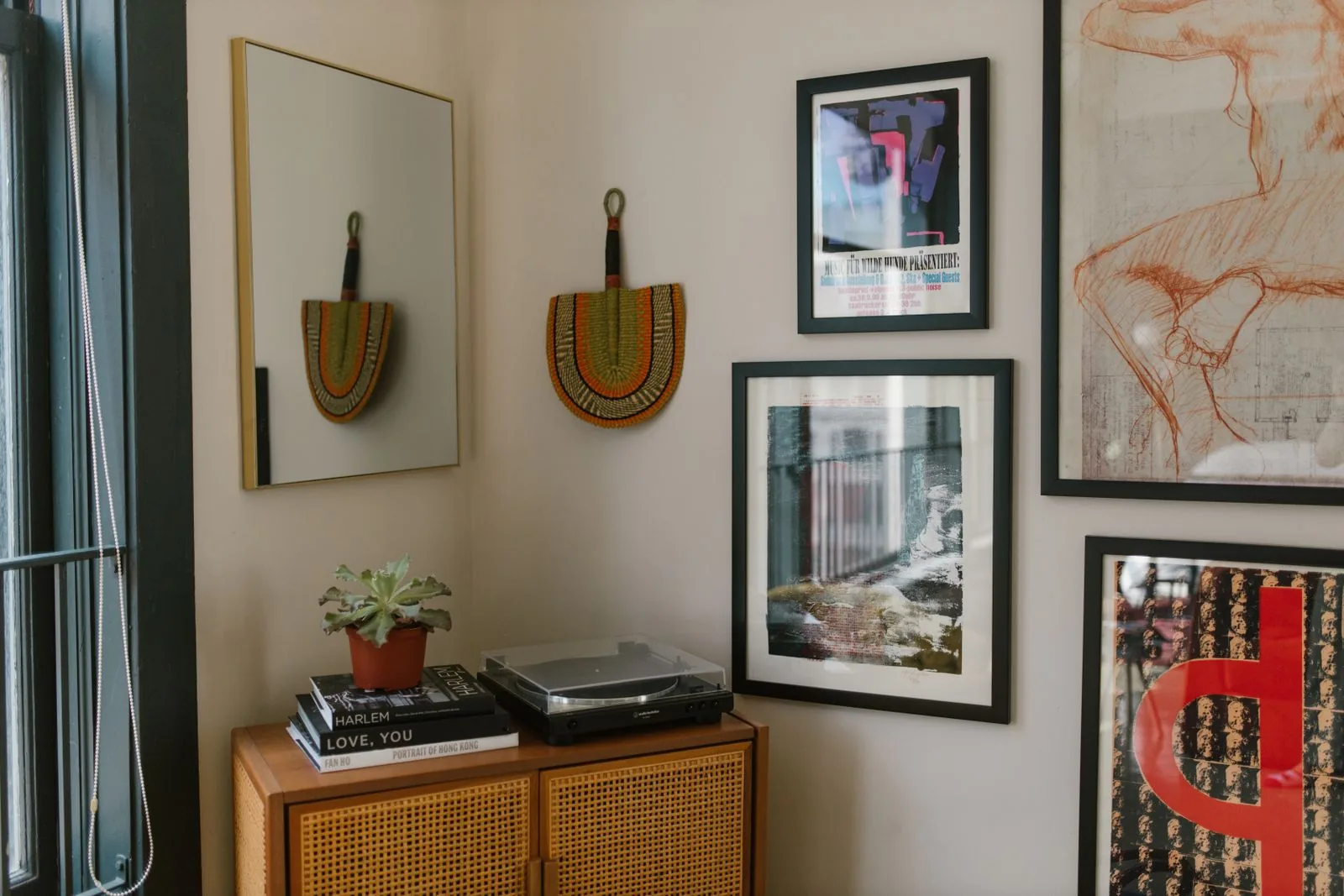
The most attractive wall is not always the most suitable place for a print. Look at daylight, display duration, heat, and moisture before deciding where it belongs. A frame is part of the protection plan, but it does not make a sensitive work immune to the conditions around it.
Identify what is inside the frame
Keep the artist, print process, paper, dimensions, and any existing framing information with your record when known. A reproduction poster, original work on paper, and photograph can have different vulnerabilities. Do not assume a sealed frame reveals everything about the materials or their condition.
If the work is valuable, fragile, or of uncertain construction, ask an appropriate framer or conservator before opening or modifying it. A room-planning task need not become a home conservation treatment. Record visible condition without dismantling the assembly. If the image is flaking, the frame is damaged, or the work appears to contact glazing in a concerning way, obtain advice rather than trying to make it look better with a new household backing.
Observe the proposed position through the day
Look at where direct sun falls and how the room changes between morning and afternoon. Include nearby lamps and any heat source, not just the view at the moment you hang the work. A spot that appears shaded during one visit may receive intense sunlight at another time. Seasonal changes can alter that pattern too.
The Library of Congress explains that light damage is cumulative and can be irreversible. Its institutional display guidance is not a promise that a household wall is safe below a guessed brightness. Use the principle to reduce avoidable exposure and choose a more suitable location. Do not rely on a phone photograph to measure a work's sensitivity or certify a preservation environment.
Treat glazing as one part of the decision
Ask about the actual glazing and framing materials if the work warrants protection. UV-filtering glazing can address part of the exposure, but LOC notes that visible light can still damage sensitive collection materials. A product description that says UV protection is not permission to place the print in direct sun indefinitely.
Keep display duration in mind as well as brightness. A copy may be more suitable for a location where you want a permanent decorative image. You can keep the original in appropriate protected storage after obtaining relevant guidance. Do not claim that rotating frames resets accumulated exposure or restores faded colors. A change of location can reduce future exposure; it cannot erase what has already happened.
Compare two candidate locations on a short room note: when direct light reaches them, nearby water or heat sources, and the support method each would require. A more shaded wall may still have an unsuitable moisture issue, so do not decide from one factor alone. If neither meets your care priorities, choose a different display arrangement or a suitable copy rather than treating the frame as complete protection.
Look beyond light to the room environment
Check for water sources, condensation, damp, and nearby heating or ventilation. LOC's paper guidance favors stable conditions and distance from environmental extremes. A visually pleasing bathroom niche or a wall beside a vulnerable pipe may create a different risk from a more stable interior room.
Do not solve a moisture problem by hiding it behind a frame. Address the building issue through the appropriate responsible person. The print's condition and the room's condition need separate responses. This guide does not specify universal household humidity limits or diagnose mold. Where the material or environment raises a concern, seek advice based on the actual work and location instead of choosing a decorative treatment to cover the evidence.
Plan secure placement without making fixing promises
Consider the complete frame's weight, dimensions, construction, and intended support. Use appropriate product instructions and permission for the actual wall or display system. A shelf or a leaning arrangement is not automatically safe simply because it avoids drilling; the work can still slide, fall, or be knocked.
Keep routes, doors, children, pets, and ordinary room activities in the placement decision. If you cannot establish a suitable support method, choose another display option or obtain qualified help. Keep the hanging or framing documentation with the work so another household member does not replace an important component with a visually similar but unsuitable one.
Record the location and review visible changes
Make a simple dated reference of the display location and any known framing details. Record the condition you can observe without claiming a photograph provides exact color measurement. If you notice a change, consult an appropriate specialist and describe both the environment and what appears different. Do not apply a cleaner to the image or open the frame as an automatic first response.
A sunny wall and a copy for daily display
Compare a valued paper print's proposed wall at several ordinary times, noting whether direct light crosses it. Keep the display preference distinct from the original's care requirements. LOC advises minimizing light exposure for works on paper; glazing is not permission to ignore the location. If the desired wall conflicts with those priorities, an appropriate copy can serve the decorative purpose while the original has suitable protection elsewhere. Label the household record so the copy and original are distinguishable. Choosing the copy is a display decision, not evidence that the original has become safe for permanent exposure.