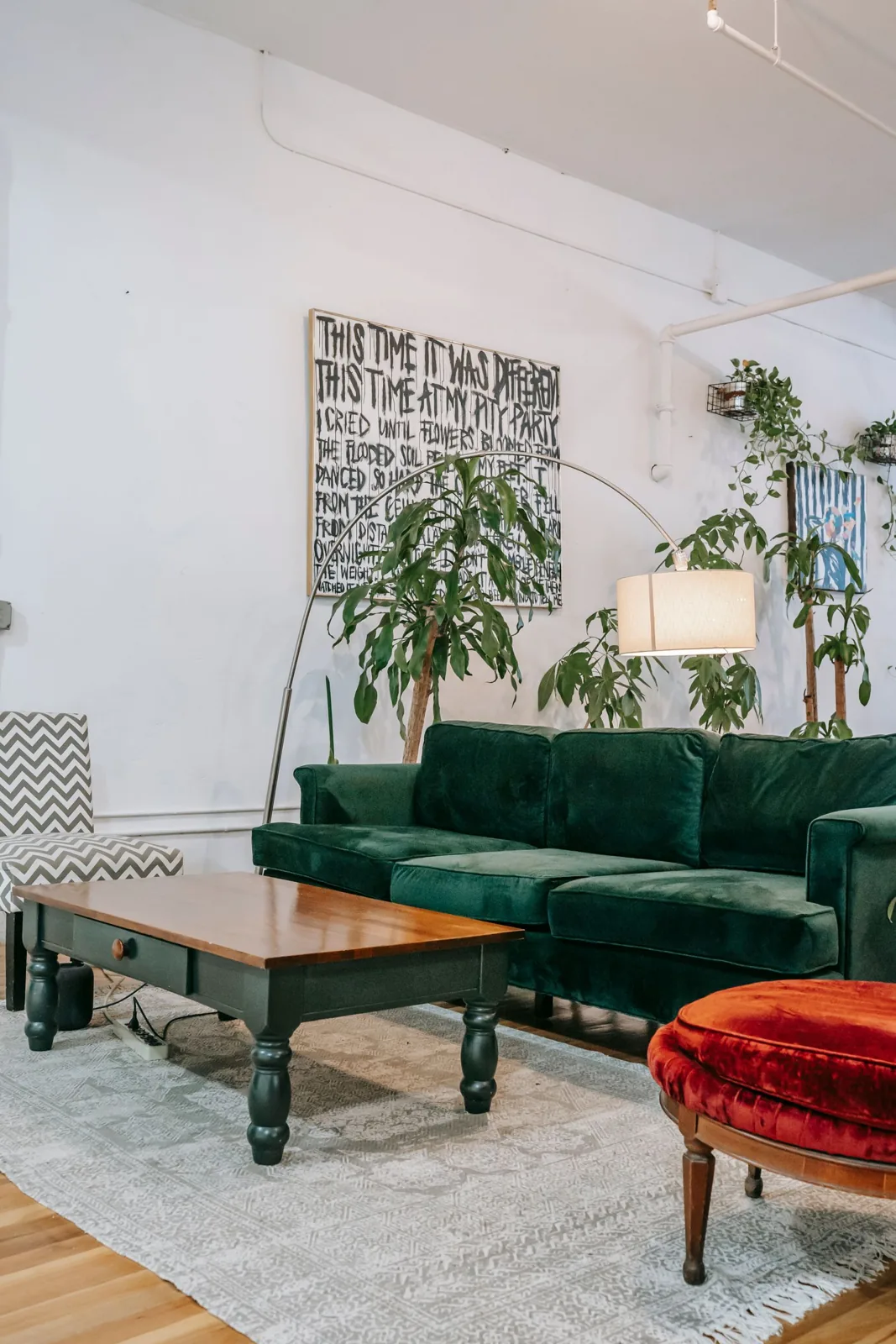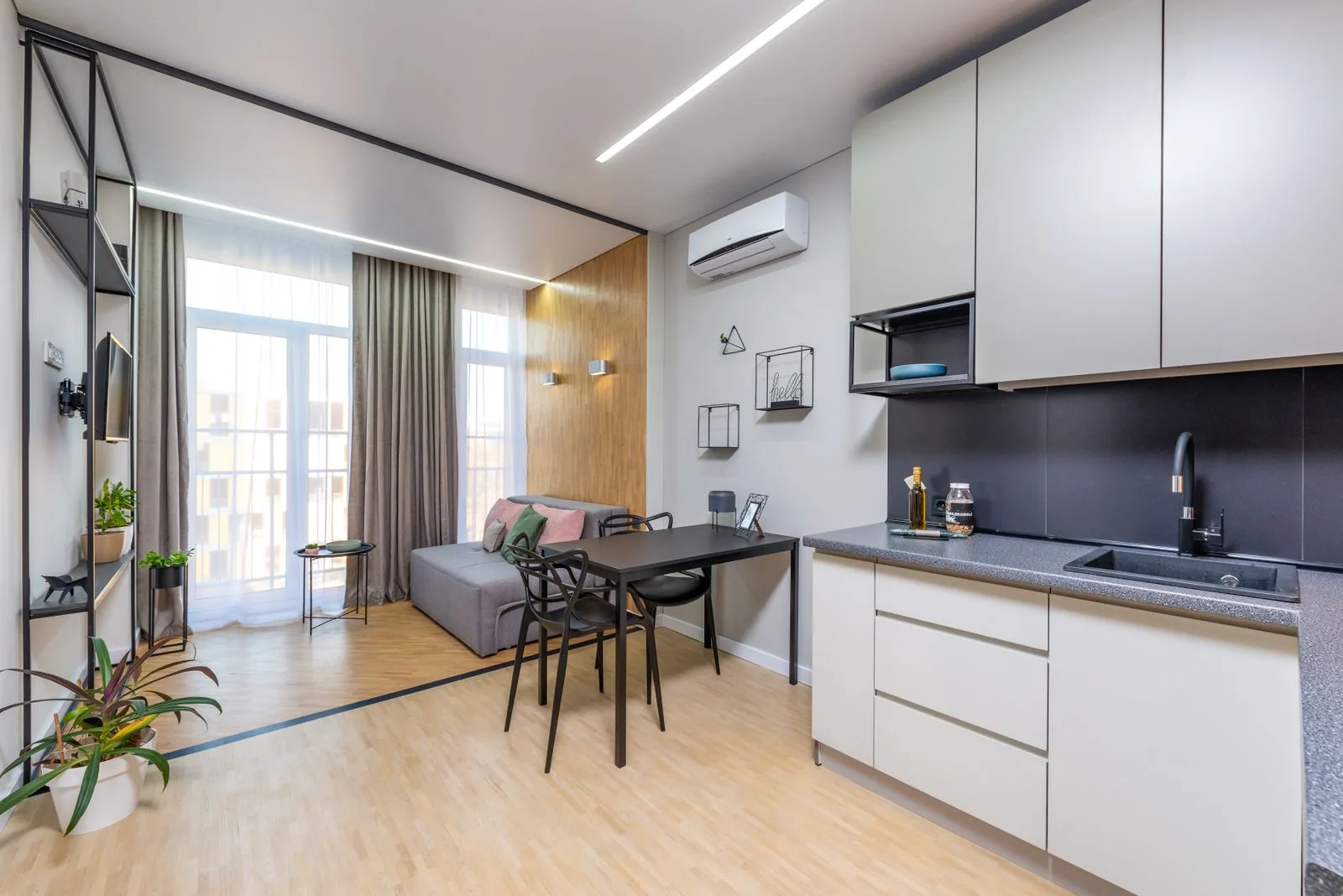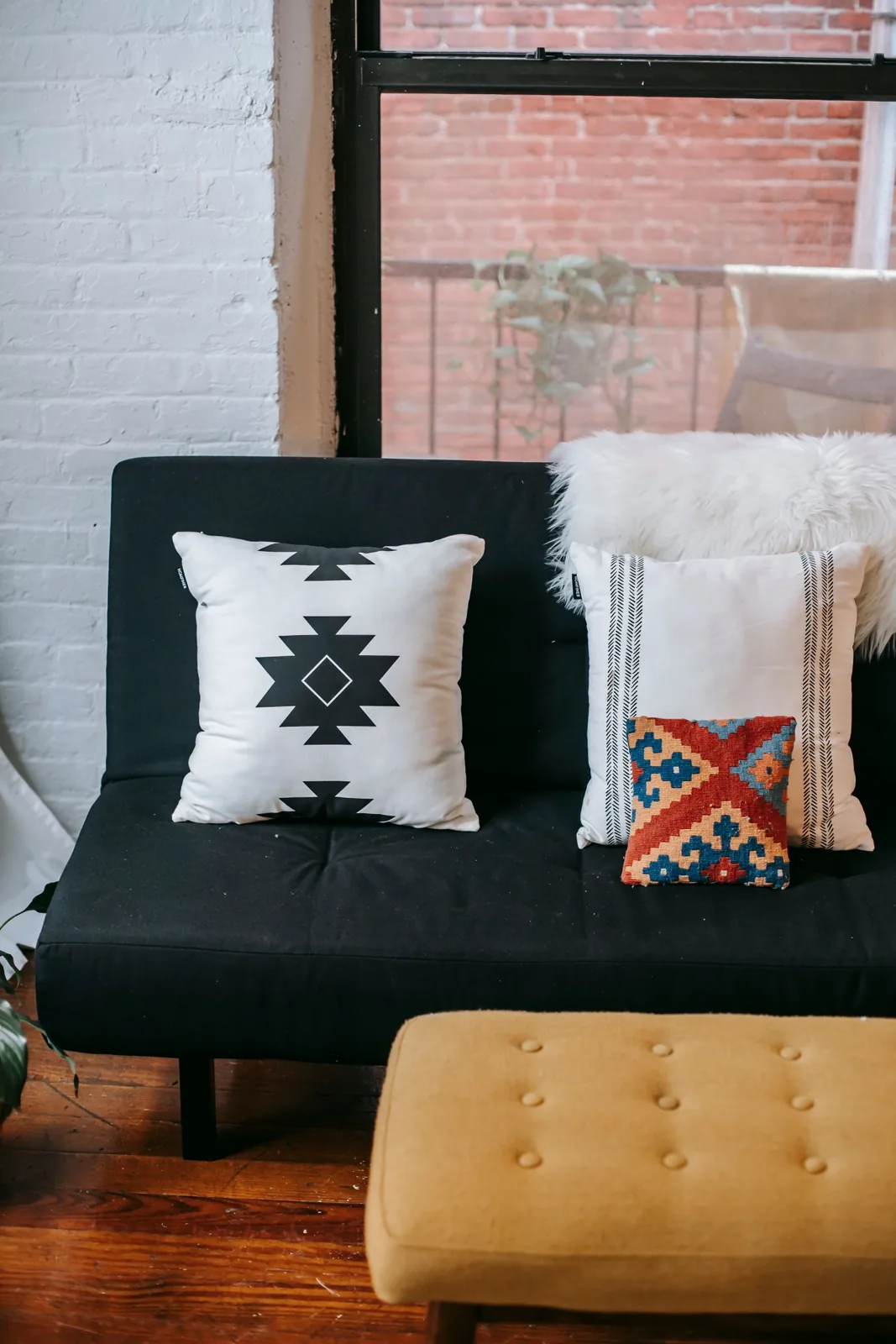
A room can feel connected without every piece coming from the same collection. Begin with the furniture that already works, then look for a few relationships you want to repeat. Color, material, shape, or the way objects are grouped can provide continuity without replacing the whole room.
Keep the useful furniture in the picture
Photograph or sketch the pieces you plan to retain, including the large fixed surfaces around them. Note why each piece stays: it serves a task, fits the room, belongs to the property, or has personal meaning. Those reasons are part of the brief. Do not treat a functional object as a problem solely because it belongs to a different decorative period.
Separate visual concerns from practical ones. A chair that blocks the route needs a layout decision, while a chair whose color differs from the sofa presents a styling choice. The two questions can coexist, but a new cushion will not solve an obstructed doorway. Make sure the main arrangement works before using decorative purchases to try to make an awkward layout feel finished.
For example, a dark dining chair and a pale sofa do not need identical covers. A textile containing a color already present in the chair can connect them while leaving the useful contrast visible. Compare that small intervention with leaving the room as it is; either may be the better choice for your own preference.
Name one relationship you already enjoy
Look for a detail that appears in more than one existing object. It may be a warm wood tone, a curved outline, a muted color, or a woven texture. Choose something you actually like, rather than a feature repeated merely by accident. That becomes one possible connecting thread for the next decisions.
IKEA's studio guide discusses a coherent visual language through color and material, while its mood-board guide begins with photographs of actual furniture. Combine those ideas in a small personal reference. Include the objects you own rather than filling the board only with ideal replacements. This is a styling method to explore; it does not establish a correct palette or a universal number of repeated details.
Use a small board to compare, not to prescribe
Place the furniture photographs together with a few candidate textile or accessory samples. Compare one change at a time. Does repeating the chair's tone elsewhere create a relationship you enjoy, or does it make the room too busy for your preference? The board lets you examine that choice before buying, without claiming to predict the finished room perfectly.
Keep scale and color limitations visible. A small picture cannot establish furniture fit, and a screen cannot guarantee how a fabric looks in your light. Test actual dimensions and physical samples where possible. The mood board is a visual reference, not a measured layout, installation plan, or permission to alter existing furniture. Save technical decisions in a separate practical record.
Group differences instead of erasing them
Different pieces can relate through how they are used. A reading chair, suitable side table, and lamp form an activity group even when their finishes differ. A dining group can share a repeated color while keeping distinct chair shapes, provided the furniture remains suitable for its actual use. Function can help the visual composition make sense.
Avoid adding small objects simply to create more matching points. Too many accessories can consume useful surfaces and introduce extra care. Try moving suitable existing pieces or removing an unrelated display before buying another item. A room may feel more coherent when its groups have clearer roles, even though no finish has been changed and the furniture still reflects different moments in the household's life.
Choose optional additions with a precise job
If a gap remains, describe it. Perhaps the room needs an appropriate lamp beside a chair, a cover for an existing cushion, or a practical storage destination. Compare additions that meet the job and then consider which connects with your chosen visual thread. This keeps decoration linked to the room rather than becoming an unrelated shopping list.
Read product requirements before assuming an inexpensive update is straightforward. A removable cover must fit and have manageable care; a lamp needs suitable placement; hardware or surface changes require the right permission and instructions. Do not refinish, paint, or modify property-owned furniture merely to make it match. A cohesive appearance does not outweigh ownership, material compatibility, or intended use.
Stop when the room reads clearly to you
Use the room normally after a small change. Look from the seats and routes that matter, not only from the photograph-friendly doorway. Notice whether the connection you intended remains appealing and whether any added object interferes with a task. Keep a useful change, revise an awkward one, and allow some differences to remain.
A wooden table beside two different chairs
Consider a useful wooden table with two chairs of different shapes. First compare their positions and the surrounding objects, rather than searching for a matching set. A repeated existing color might connect the view; simplifying one crowded grouping may be enough without a purchase. NYSDEC's reuse guidance supports considering continued use and sharing, but it supplies no rule about what makes a room attractive. Keep the interpretation personal: if the pieces serve their jobs and the grouping pleases you, their differences can remain. Do not turn one visual mismatch into several replacement purchases by default.