A bookshelf should support both the books and the way you retrieve them. Begin with a suitable location and stable shelving, then look at how volumes stand, open, and return. Preventing avoidable strain is more useful than choosing a decorative arrangement that makes each book awkward to handle.
Choose the location before arranging the spines
Look at light, nearby water, heating, and the environmental stability of the proposed shelf. The Library of Congress recommends avoiding direct or intense light and locations with environmental extremes or elevated leak risks. A bright windowsill or a poorly controlled storage area may be convenient without being kind to a valued collection.
Keep the household context realistic. You are choosing a better ordinary location, not recreating an institutional store. A book of particular value or unusual material may need more specific preservation advice. Also check the shelving's intended load, stability, and anchoring instructions. Paper is heavy, and a visually appealing arrangement does not establish that a unit is appropriate for the weight you plan to place on it.
Try returning the largest frequently used volume before completing the arrangement. If that requires balancing other books or removing a heavy pile, revise the grouping. A shelf that looks supported when untouched can still fail its ordinary retrieval task.
Support volumes according to size and condition
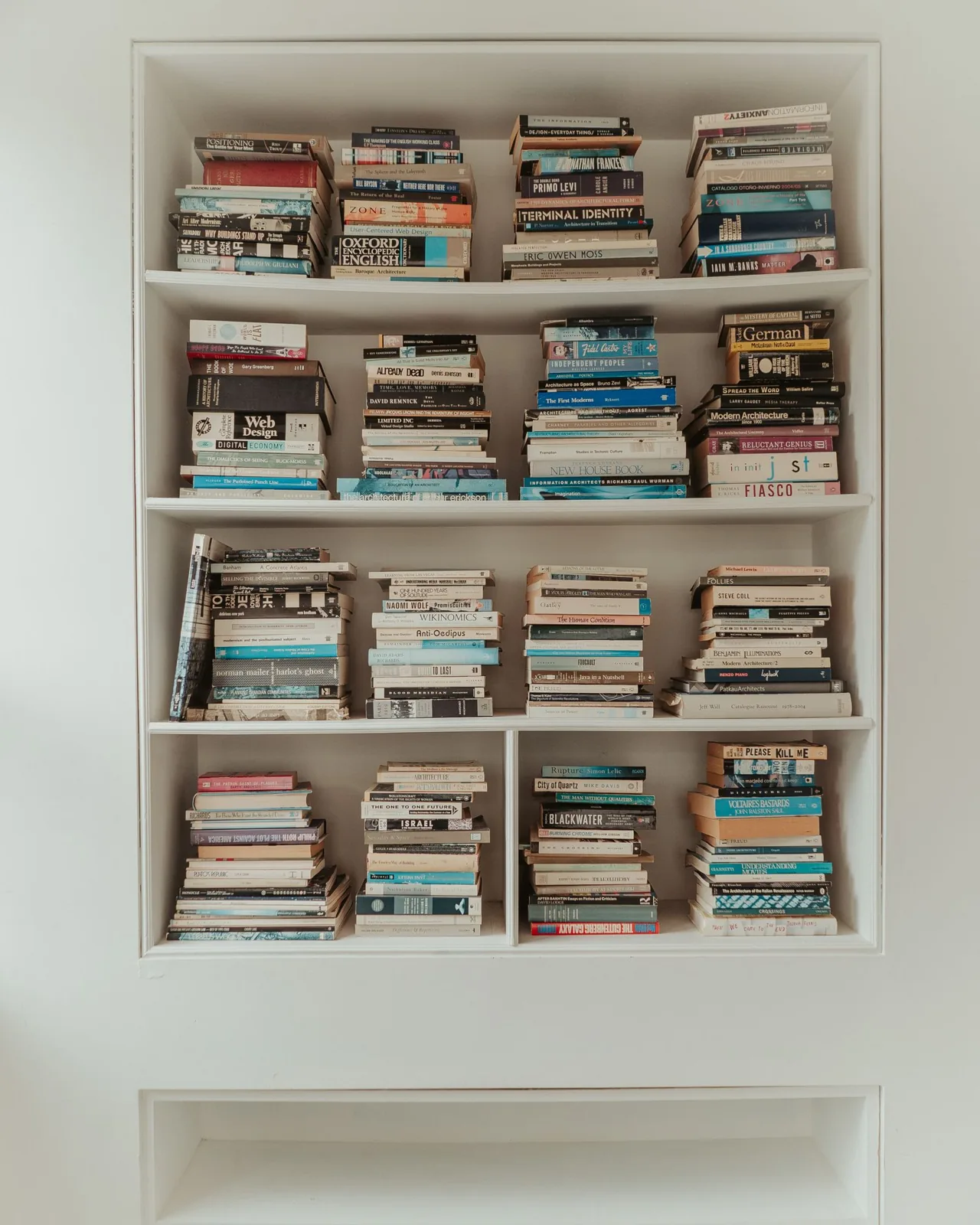
For ordinary sound books, keep upright volumes supported rather than leaning across an empty shelf. LOC recommends grouping similar sizes and using appropriate bookends. Leave enough room to retrieve a volume without scraping it against a sharp edge or pulling an entire tight row outward. A supported row should remain usable.
Large books that cannot stand appropriately may need flat storage with full support. Do not create a tall unstable pile or put fragile volumes beneath unnecessary weight. Examine loose boards, detached pages, and weakened bindings separately. A protective enclosure may be appropriate for an unstable item, but choose it using relevant conservation guidance instead of assuming any decorative box gives suitable long-term protection.
Retrieve a book without pulling its headcap
Prepare a clear landing place before reaching for a heavy or fragile volume. The LOC handling guide recommends gripping the middle of the spine from both sides rather than tugging at its top. Make room in the neighboring row carefully so you can hold the book securely without forcing the binding.
Support a large book with both hands as needed, and avoid carrying more than you can handle comfortably. Keep food, drinks, and clutter away from the place where it will be opened. The practical sequence matters: choosing a table first can prevent the awkward moment when you are holding a large volume and have nowhere suitable to set it down.
For a frequently consulted large cookbook, a suitable supported resting place may matter more than keeping it among smaller volumes by subject. Record its separate location in your finding order. That preserves the practical connection without forcing the book into a shelf arrangement chosen for narrower paperbacks.
Let the binding determine how far it opens
Do not press a book flat simply to make a page easier to photograph or read. The opening angle and support should suit the structure. LOC describes supporting the covers to reduce strain, with book cradles as one option. A fragile binding may need specialist guidance before use.
Handle ordinary paper books with clean, dry hands and turn pages carefully. Avoid using improvised sticky tabs, folding corners, or adding objects that stress the pages or binding. A loose bookmark should be suitable and thin enough for the purpose. Do not treat a successful method on a modern paperback as evidence that the same pressure or attachment is safe for an old family volume.
Care for the surroundings without adding a treatment
Keep shelves and the surrounding area clean using methods appropriate to their surfaces. LOC advises avoiding fragranced or chemically treated dusters for books and describes controlled low-suction techniques. Do not improvise strong vacuuming on loose pages or brittle covers. If a surface sheds, flakes, or catches, stop rather than repeatedly working at it.
Book care does not mean polishing leather, spraying pages, or repairing a spine with household tape. Do not add oils, dressings, glue, or adhesive tape to a valued volume as part of a tidy-up. Mold, water damage, pests, and significant structural problems require a different response. Seek appropriate conservation advice instead of moving a questionable object straight into an otherwise sound row.
Keep the arrangement easy to understand and use
Choose a finding order that makes sense to the household, such as subject or author, while preserving support and practical handling. A purely decorative color sequence is optional; it should not require unsafe reaching or make an often-used heavy book difficult to retrieve.
A large album beside smaller paperbacks
On a mixed shelf, compare how a large album and a paperback are supported and retrieved. The album should not lean across the smaller books merely to make the spines align. Prepare an appropriate resting surface before taking it down, and let its binding limit how far it opens. LOC's handling guidance describes supporting an opening rather than forcing a book flat. Record a separately housed fragile volume in the shelf index so its absence is understandable. A tidy row is not the goal if achieving it makes the largest or weakest book harder to use without strain.